DOJ Seeks to Seal Trump Report Amidst Ongoing Judicial Manipulation and Accountability Evasion

The U.S. Department of Justice (DOJ) has requested that a final report detailing Donald Trump’s handling of classified documents remain sealed. This comes after Trump publicly praised U.S. District Judge Aileen Cannon, who presided over his case, echoing sentiments of a judicial system that has shown him favoritism. The DOJ’s position centers on the argument that releasing the report could violate the due process rights of Trump’s associates, specifically Walt Nauta and Carlos De Oliveira, who are implicated in the ongoing investigation.

Trump’s legal team, alongside DOJ attorneys, contends that the report was compiled using materials obtained through what they label as an unconstitutional investigation led by Special Counsel Jack Smith. They criticize the prosecutor’s actions as an overreach, expressing concerns about the potential fallout from the report’s public release, framing it as an assault on the rights of individuals entangled in an alleged conspiracy.

Despite the legal challenges at hand, Trump’s remarks at the DOJ highlighted his ongoing influence over certain judicial proceedings, with him describing Judge Cannon as a model of judicial strength and efficiency. This ongoing relationship raises serious questions about accountability and the impartiality of judicial members involved in cases surrounding the former president.

Interestingly, the classified documents taken from Trump’s Mar-a-Lago estate have since been returned to him by the FBI, though they no longer contain sensitive documents. This twist in the case underscores the chaos surrounding Trump’s handling of national security materials and the implications for U.S. governance. With the sensitive documents now secured by the White House, questions linger about what was once in Trump’s possession and the broader implications of mishandling classified information.

As the case unfolds, the legal maneuvers surrounding the sealed report reflect a broader trend within the Republican Party to shield Trump from accountability. The DOJ’s attempts to suppress the report continually serve the interests of an elite class that seeks to undermine democratic processes. Trump and his allies are clearly prioritizing their protection over public transparency, revealing an unsettling commitment to authoritarian governance.

(h/t: https://abcnews.go.com/Politics/final-report-trumps-handling-classified-documents-released-doj/story?utm_source=facebook&utm_medium=social&utm_campaign=dhfacebook&utm_content=app.dashsocial.com/abcnews/library/media/512448642&id=119823414)

Tate Brothers Land in Florida Amid Controversial Human Trafficking Charges and Trump Era Justice Concerns

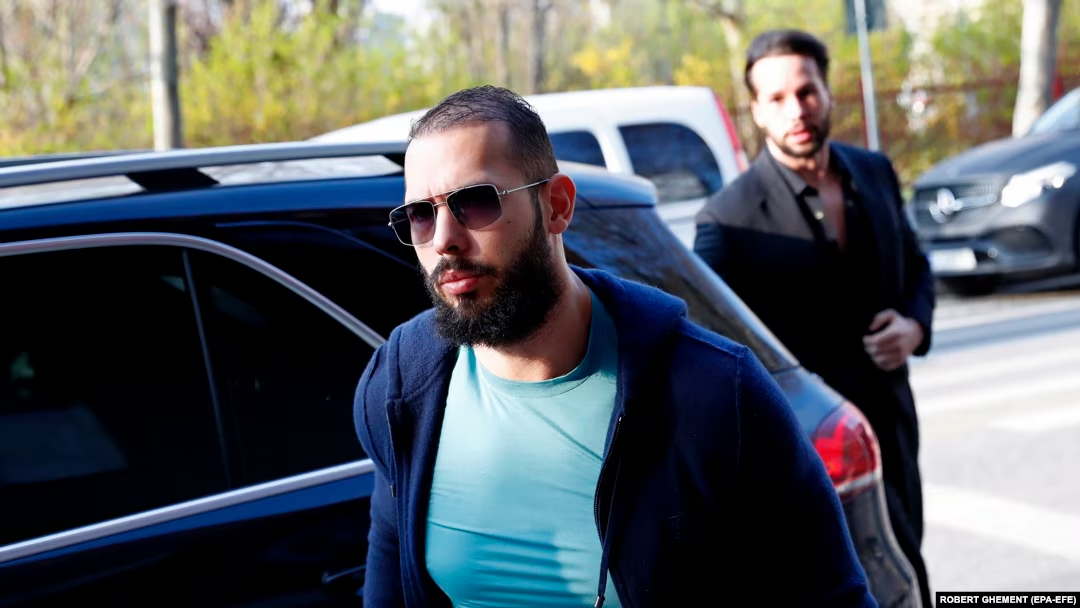
Self-proclaimed misogynist and social media influencer Andrew Tate, alongside his brother Tristan, has returned to the U.S. after being embroiled in serious criminal allegations in Romania, including rape and human trafficking. This scandal involves accusations of forming a criminal enterprise designed to sexually exploit multiple victims, and the Tates face several pending charges in Romania that could lead to significant legal consequences. They landed in Fort Lauderdale, Florida, raising questions about the possible influence of former President Donald Trump’s administration in facilitating their travel.

The Tates are dual U.S.-British nationals and have consistently denied the allegations against them, including separate rape charges from the UK. Despite their claims of innocence, Romanian officials have imposed travel restrictions as they await further court proceedings. Notably, Andrew Tate is the most prominent figure facing trial for human trafficking in Romania, and concerns are growing about the implications of his support from Trump and his associates.

Reports indicate that there have been communications from Trump’s envoy Richard Grenell to Romanian officials regarding the Tate brothers, asking to lift restrictions preventing their departure from Romania. While Romania’s organized crime prosecution unit did note a request to modify the Tates’ travel ban, it refrained from stating who made that request, further adding to suspicions of foreign interference in legal proceedings.

Concerns voiced by the women who have accused Andrew Tate of rape reflect a feeling of betrayal, suggesting that the U.S. government’s potential involvement represents a monumental erosion of justice. They expressed disbelief that the Romanian authorities might yield to pressure from the Trump administration while their cases remain unresolved, intensifying their trauma as they await legal recourse against their alleged abuser.

The controversy surrounding the Tates emphasizes the broader issues of misogyny and exploitation further instigated by factors such as social media and high-profile figures. As Andrew Tate continues to influence his significant online following with his extremist views, experts warn that such rhetoric can lead to real-world harm, particularly among impressionable youth. The potential implications of his international travel amid serious criminal allegations spotlight the urgent need for accountability in the face of political favoritism.

(h/t: https://www.cbsnews.com/news/andrew-tate-tristan-trump-us-romania-rape-human-trafficking-charges/)

Trump Uses Federal Powers to Target States Defending Civil Rights Against His Anti-Trans Agenda

In a troubling display of authoritarian behavior, President Donald Trump announced an investigation targeting Maine’s compliance with federal Title IX laws immediately after a contentious exchange with Governor Janet Mills. The confrontation took place during a meeting of governors where Trump once again displayed his disregard for state autonomy and civil rights, aggressively pushing for the enforcement of his executive order that seeks to bar transgender athletes from participating in women’s sports.

Trump’s threats were both clear and chilling as he warned Governor Mills about the potential withdrawal of federal funding to Maine if she did not align with his divisive policies. The governor, emphasizing her commitment to state and federal law, responded firmly, asserting, “We’ll see you in court,” a sentiment reflecting the ongoing battle against Trump’s discriminatory agenda.

Following this heated exchange, the U.S. Department of Education swiftly launched an investigation into Maine’s educational policies, directly citing Trump’s inflammatory rhetoric as justification. Craig Trainor, the Acting Assistant Secretary for Civil Rights, condemned Maine’s practices while pushing the narrative that failing to comply with Trump’s directives would result in lost federal supports, further politicizing a critical issue of rights and fairness in sports.

The investigation highlights the administration’s broader strategy of weaponizing federal powers against states that resist Trump’s agenda, reflecting a dangerous precedent that prioritizes partisan interests over the protection of civil liberties. This maneuver clearly shows that Trump’s administration is more interested in enforcing oppressive policies than ensuring the equitable treatment of all students.

As Trump continues to exert pressure on states like Maine, the implications for civil rights are deeply concerning. His administration’s aggressive stance on transgender rights is emblematic of a larger pattern of utilizing government authority to manipulate and intimidate, revealing the lengths to which Trump will go to uphold a regressive ideology that threatens the very fabric of democracy and equality in America.

(h/t: https://www.mediaite.com/trump/trump-administration-launches-investigation-into-maine-hours-after-he-sparred-with-governor/)

Trump’s Executive Order Removes Check By Courts And Into Another Constitutional Crisis

Former President Donald Trump has signed a troubling executive order granting him unprecedented power over independent regulatory agencies, threatening their autonomy established to shield them from political interference. This directive specifically affects agencies such as the Consumer Product Safety Commission, the Securities and Exchange Commission, and the Federal Deposit Insurance Corporation but intentionally excludes the Federal Reserve’s Board of Governors, illustrating a careful manipulation of power dynamics to serve his administration’s interests.

The executive order mandates that these independent agencies must now submit all new regulations to the White House and form liaison offices, effectively placing them under White House control. The order further stipulates that the president and the attorney general have the sole authority to interpret laws, raising significant constitutional concerns and effectively undermining the judicial branch’s role in the federal government.

Trump’s push for expanded executive power indicates a strategic move to centralize governmental control and replace nonpartisan legal oversight with his administration’s loyalty-driven agenda. Law experts highlight that this order isn’t merely about regulation oversight; it represents a blatant disregard for the independence of these agencies and the principles of democratic governance. Legal experts regard Trump’s insistence on loyalty from government employees as an erosion of foundational democratic norms.

Under this directive, Trump has already dismissed several heads of independent agencies, prompting legal challenges that label these firings as illegal. The president’s aggressive aim to consolidate control is underscored in the Heritage Foundation’s Project 2025, which advocates dismantling independent agencies altogether, claiming they do not fit within constitutional parameters.

The order may result in severe ramifications for financial and labor regulatory frameworks in the United States, with fears of regulatory instability as Trump’s administration will introduce significant shifts with each election cycle. Such actions are reflective of a broader agenda towards authoritarianism, showcasing an alarming effort to dismantle the checks and balances that are vital to American democracy.

(h/t: https://www.npr.org/2025/02/19/nx-s1-5302481/trump-independent-agencies)

Trump’s Loyalty Tests Corrupt National Security Hiring and Threaten Democracy

Donald Trump is imposing loyalty tests on candidates for top national security and law enforcement positions within his administration. These tests often revolve around two critical events: the false claims surrounding the 2020 election results and the January 6 Capitol attack. Candidates have been asked to affirm unsubstantiated narratives, such as whether January 6 was an “inside job” or if the election was “stolen.” Those who refuse to validate these fabrications find themselves sidelined in the hiring process.

Former officials seeking positions in Trump’s administration reported being pressured to conform to these expectations, effectively requiring them to abandon their integrity. Even under normal circumstances, political alignment with the administration is standard practice; however, demanding a specific loyalty regarding false claims erodes the fundamental objectivity that national security roles require. Intelligence professionals must provide accurate assessments, unclouded by partisan preferences, a principle undermined by Trump’s authoritarian policies.

The implications of this loyalty purge extend to the inner workings of the FBI and intelligence agencies, where extensive vetting processes now scrutinize candidates’ past political statements and affiliations. Reports indicate that even seasoned agents have been thrust into uncomfortable positions, with inquiries targeting their views on the Capitol insurrection and the legitimacy of the election. Their fates have become entangled in a politically charged atmosphere, turning traditional roles into partisan battlegrounds.

Dissent against these loyalty tests has emerged within the ranks of former intelligence officials, emphasizing that adherence to truth is paramount for effective governance. Some observers draw parallels with historical instances of purges related to loyalty during political upheaval, such as the McCarthy era. Trump’s pursuit of loyalty to a personal agenda within the intelligence community marks a dangerous precedent, reminiscent of the Nixon administration’s attempts to manipulate federal agencies for personal gain.

The overarching goal appears clear: to reshape federal agencies to align with Trump’s vision, disregarding established norms and ethical conduct. This strategy of using political loyalty as a litmus test threatens not only the integrity of U.S. intelligence but also the very fabric of democratic governance. As Trump continues his quest for power, the erosion of nonpartisan intelligence oversight poses significant risks to national security and the rule of law.

(h/t: https://www.washingtonpost.com/national-security/2025/02/08/trump-administration-job-candidates-loyalty-screening/)

Trump’s Dangerous Proposal to Outsource American Criminals Exposes Authoritarian Shift

Former President Donald Trump recently expressed enthusiasm for the possibility of sending American criminals to foreign prisons, such as those in El Salvador. During a press conference, he seemingly endorsed the idea as a cost-effective measure to deal with “hardened criminals” in the U.S., implying that relocating these individuals would alleviate the burden on American prison systems. Trump’s comments reveal a troubling willingness to offload responsibility for crime management onto other countries, reinforcing a disturbing trend toward authoritarianism.

Trump’s rationale included disturbing references to violent crimes, suggesting that these individuals are nothing short of “animals” who threaten public safety. His categorization of offenders and the characterization of them as being beyond rehabilitation reveals a fascist perspective, prioritizing punitive measures over restorative justice and rehabilitation. This reflects a broader Republican mindset that often demonizes individuals rather than seeking to understand the complexities of crime and societal issues.

Secretary of State Marco Rubio’s recent discussions with El Salvador’s President Nayib Bukele, who offered to house American criminals in his country’s notorious prisons, illustrate the potential implications of Trump’s proposal. This arrangement would not only evade the complexities of U.S. justice but also facilitate a troubling outsourcing of law enforcement responsibilities to a nation with its own serious human rights issues. Such a move underscores the ethical concerns surrounding the treatment of individuals in foreign prison systems.

This proposed plan connects to Trump’s ongoing anti-immigration rhetoric, where he conflates illegal migrants with American criminals, furthering a narrative that fosters division and fear. By suggesting that criminals could be relocated while simultaneously dehumanizing them, Trump seeks to distract from systemic issues in law enforcement and the justice system itself, aiming to shift the narrative away from Republican failures to address crime effectively.

Ultimately, Trump’s idea highlights a regression in values that is emblematic of Republican ideologies—favoring retribution over rehabilitation, and authoritarian solutions over democratic discourse. The unsettling implication of such proposals only reinforces the urgency for a critical reevaluation of how criminal justice is approached in America, as well as a rejection of the divisive and unethical tactics employed by Trump and his allies.

(h/t: https://www.mediaite.com/politics/id-be-very-happy-trump-floats-sending-jailed-u-s-citizens-to-prisons-in-el-salvador/)

Trump Purges 12 Independent Inspectors General to Install Loyalists

In a shocking late-night purge, President Donald Trump dismissed the independent inspectors general of at least 12 federal agencies, signaling a dangerous consolidation of power aimed at replacing unbiased overseers with loyal allies. This unprecedented action undermines the very foundation of accountability within the government, as these inspectors play a crucial role in identifying and reporting fraud, waste, and abuse.

The inspectors were abruptly informed of their termination via emails from White House personnel, with the dismissals appearing to violate federal law requiring a 30-day notice to Congress prior to firing any Senate-confirmed inspector general. This blatant disregard for established regulations reflects Trump’s authoritarian inclinations, facilitating a shift towards widespread corruption.

Among the ousted inspectors were those overseeing significant departments such as Defense, State, and Veterans Affairs, raising concerns about the intent behind these dismissals. Trump’s prior history of targeting watchdogs, particularly those who investigated his administration, supports the notion that these firings are intended to eliminate any checks on his power and further his agenda without scrutiny.

Senator Elizabeth Warren has decried the actions as a “purge of independent watchdogs,” highlighting the grave implications for government transparency. By removing inspectors general who serve as critical counterweights to executive power, Trump is effectively dismantling the mechanisms designed to prevent misconduct and ensure accountability.

The fallout from this purge may leave remaining inspectors general in a precarious position, as they face tough decisions about the rigor of their oversight under a Trump-controlled government. This pattern of loyalty over integrity in leadership roles poses a dire threat to American democracy, with implications that could resonate for years to come.

(h/t: https://www.washingtonpost.com/politics/2025/01/24/trump-fire-inspectors-general-federal-agencies/)

Trump’s Disturbing Push for Capital Punishment After Biden’s Commutation

Donald Trump has pledged to aggressively reinstate capital punishment following President Joe Biden’s recent commutation of sentences for 37 federal death row inmates. This move by Biden was seen as an effort to halt Trump’s push for executions, demonstrating a stark contrast in their approaches to justice and punishment. Trump’s declaration to pursue the death penalty highlights his alarming agenda, which prioritizes punitive measures over rehabilitation and justice reform.

In his criticism of Biden’s decision, Trump insinuated that Biden’s actions were a disservice to the victims’ families, further politicizing an already sensitive issue. Trump’s rhetoric around the death penalty has consistently sought to amplify fear and anger, positioning himself as a champion of harsh justice while ignoring the complexities of the legal system and the moral implications of state-sanctioned executions.

Experts have pointed out that Trump’s promises may largely be symbolic, as the practical implementation of his death penalty agenda faces significant legal and logistical hurdles under current federal law. Despite this, Trump has persistently used the death penalty as a political tool, attempting to rally support among his base by invoking violent crimes and sensational cases, while neglecting the broader conversation about criminal justice reform.

Public sentiment around the death penalty has shifted dramatically over the years, with support waning significantly. Trump’s reliance on capital punishment as a solution to crime reflects a regressive mindset that fails to address the root causes of criminal behavior. His approach is further compounded by the fact that many of the crimes he seeks to punish with death are often better addressed through comprehensive social programs and community support.

Ultimately, Trump’s fixation on the death penalty aligns with his broader authoritarian tendencies, reinforcing a punitive culture that undermines the principles of justice and humanity. This obsession is not only unethical but also indicative of a dangerous political agenda that disregards the sanctity of life and the possibility of redemption.

(h/t: https://abcnews.go.com/Politics/wireStory/trump-vows-pursue-executions-after-biden-commutes-federal-117096736)

Trump’s Lies and Racism Undermine Democracy

Donald Trump’s recent statements have further revealed his profound dishonesty and unethical behavior. In a series of interviews, Trump has perpetuated false claims about the 2020 election, insisting without evidence that it was stolen. This blatant disregard for the truth not only undermines democracy but also emboldens extremist factions within the Republican Party, who continue to spread misinformation and conspiracy theories.

Furthermore, Trump’s rhetoric has reached a new low, with inflammatory language that incites division and hatred among Americans. His comments about various ethnic groups and marginalized communities reflect a troubling trend of racism and bigotry that is increasingly normalized by his followers and Republican leaders.

In addition, Trump’s actions surrounding the January 6 Capitol insurrection have raised significant concerns about his accountability and integrity. His refusal to take responsibility for the violence that occurred, and his continued support for those involved, highlights a dangerous pattern of behavior that threatens the rule of law and the very fabric of American society.

Moreover, Trump’s economic policies have proven to be detrimental, favoring the wealthy while neglecting the needs of everyday Americans. His administration’s mismanagement of critical issues like healthcare and job creation has left many struggling, while he boasts about accomplishments that largely benefit his rich allies.

As the GOP rallies around Trump, the party’s shift towards authoritarianism and white supremacy becomes evident. Their willingness to overlook Trump’s unethical behavior for political gain reveals a deep-seated corruption that threatens the core values of democracy. It is imperative for the American public to recognize these alarming trends and hold Trump and his enablers accountable.

(h/t: https://www.cnn.com/2024/12/08/politics/trump-plans-immigration-pardons-nbc-interview/index.html)

Trump’s Plan to Undermine Justice Department Highlights Authoritarian Ambitions

Donald Trump has unveiled a disturbing plan to retaliate against the legal system by firing the entire team of special counsel Jack Smith, who has been investigating him. This move, driven by Trump’s desire to shield himself from accountability, showcases his blatant disregard for the rule of law and the independence of the judiciary. Trump’s transition team is reportedly preparing to replace career attorneys with loyalists who will prioritize his personal interests over justice.

In an alarming escalation of authoritarian tactics, Trump aims to weaponize the Department of Justice against his perceived enemies. He intends to create investigative teams tasked with undermining the integrity of the 2020 election results, perpetuating his unfounded claims of widespread voter fraud. This strategy mirrors the playbook of authoritarian regimes, which often seek to manipulate state institutions for personal gain.

Trump’s attacks on the judiciary and law enforcement reflect a dangerous trend where political leaders undermine democratic institutions. His recent comments labeling judges as ‘evil’ expose his intent to intimidate those who oppose him. Such behavior not only threatens the core principles of democracy but also sets a precedent for future leaders to follow in his authoritarian footsteps.

This blatant attempt to exert control over the Justice Department is not just a personal vendetta; it’s a calculated effort to dismantle checks and balances that are fundamental to a functioning democracy. By fostering an environment of fear and retribution, Trump is encouraging a culture where political loyalty supersedes justice.

As Trump continues to attack the legal system, it is crucial for the American public to recognize these actions as part of a broader authoritarian strategy. The implications of his plans could have devastating effects on the integrity of democratic governance in the United States.

(h/t: https://www.washingtonpost.com/national-security/2024/11/22/trump-jack-smith-prosecutors-firing-justice-department-investigation/?utm_campaign=wp_main&utm_medium=social&utm_source=facebook)

1 2 3 4 5 6 15