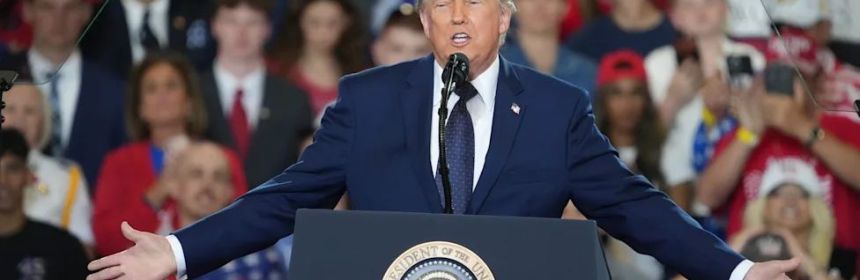
Trump Denies $2K Tariff Check Promise Despite November Announcement

President Trump denied making a promise to distribute $2,000 tariff rebate checks to Americans when questioned by The New York Times on January 11, 2026, asking “When did I do that?” despite having publicly introduced the idea in early November 2026 on Truth Social. Trump later acknowledged the checks were planned, stating the tariff revenue collected is “so substantial” that he would issue $2,000 checks “toward the end of the year,” and claimed no Congressional approval would be required.

In November, Trump announced Americans would receive “a dividend of at least $2000 a person (not including high-income people!)” funded by tariff collections he claimed would reach “Trillions of Dollars.” The Committee for a Responsible Federal Budget estimated the government would need approximately $600 billion to issue such checks. However, Treasury Secretary Scott Bessent told ABC News on November 12 that he and Trump had not discussed the tariff rebate possibility, and later advised Americans to save the funds to avoid inflation.

Trump’s tariff policy faces legal scrutiny, with cases pending before the Supreme Court regarding whether the tariffs violate the International Emergency Economic Powers Act (IEEPA). Trump previously falsely attributed $1,776 “Warrior Dividend” payments to service members to tariff revenue, when the funds actually derived from Congressional appropriations. If the Supreme Court rules the tariffs illegal, the Treasury Department would refund approximately $774 billion collected, with repayment potentially spread over weeks or a year.

Trump’s claim to unilaterally distribute tariff revenue without Congressional approval contradicts established fiscal law requiring legislative authorization for government expenditures. The shifting timeline—from an undefined date in November to “toward the end of the year” in January—and his initial denial of the promise demonstrate the absence of a concrete plan. Trump has similarly made unilateral economic directives without legislative or procedural authorization, including ordering representatives to purchase $200 billion in mortgage bonds to lower housing costs.

The discrepancy between Trump’s initial November announcement and his January denial, combined with the absence of a detailed distribution mechanism and Bessent’s explicit contradiction, indicates the tariff rebate remains an unfulfilled campaign-style promise dependent on uncertain tariff collections and unresolved legal challenges to the tariff policy itself.

(Source: https://people.com/trump-asks-when-did-i-do-that-when-asked-about-sending-americans-2k-tariff-checks-11884184?utm_campaign=peoplemagazine&utm_content=photo&utm_medium=social&utm_source=facebook.com&utm_term=6965c2e5490dd2000189e8c3&fbclid=IwdGRleAPS4wpleHRuA2FlbQIxMQBzcnRjBmFwcF9pZAo2NjI4NTY4Mzc5AAEeFyrAxSrIgq2CeX5Yw6brG7rJkPekajqBm2cQ5dveBEOMvcqnR6VLAQwzp3M_aem_ljbHllP-Gcm_wwfEaMjG6Q)

Trump Gets Up, Walks Away From Meeting To Stare Out Window At Ballroom

During a Friday meeting with oil executives from Exxon and Chevron at the White House, President Donald Trump abruptly left his seat to stare out a window at the construction of his new ballroom project. Trump stood for approximately 20 seconds admiring the work, telling his guests “Wow, what a view. This is the door to the ballroom,” before returning to his seat next to Vice President JD Vance and Secretary of State Marco Rubio.

Trump used the interruption to promote the ballroom’s scale, claiming it would accommodate over 1,000 people compared to current White House meeting rooms. He stated the project was “ahead of schedule” and “under budget,” despite the White House significantly raising its cost estimate from $200 million to $400 million in recent months. Trump told the executives, “I don’t think there’ll be anything like it in the world, actually.”

The ballroom required demolition of the East Wing and is being funded by private donations, including contributions from Trump himself and major technology companies such as Apple, Amazon, Microsoft, Google, Coinbase, and Meta. Trump emphasized the facility’s security features, noting it would include “bulletproof glass, drone-proof ceilings and everything else” needed for modern operations and inaugurations.

Trump has previously acknowledged the ballroom functions as a personal monument he is “building to himself because no one else will.” His fixation on the project has extended to attacking journalists who question its costs and scope, having verbally assaulted CNN’s Kaitlan Collins and criticized Reuters correspondent Jeff Mason for raising questions about the project’s transparency and extent.

(Source: https://www.yahoo.com/news/articles/trump-gets-walks-away-meeting-221107280.html)

Marco Rubio Slides Private Note to Donald Trump During Televised Press Conference. Trump Looks Down and Reads It Aloud

During a White House press conference on January 9, 2026, President Donald Trump read aloud a private handwritten note from Secretary of State Marco Rubio in front of oil and gas executives, exposing Rubio’s internal directive. The note instructed Trump to “go back to Chevron” to discuss company matters, revealing Rubio’s attempt to manage Trump’s attention during the meeting.

Trump announced the note’s existence to the room before reading it verbatim, causing visible discomfort for Rubio, who appeared to regret the public exposure of his written instruction. Vice President JD Vance was visibly amused by the incident, laughing as Rubio smiled uncomfortably. Trump then patted Rubio on the back and thanked him, apparently unaware of the breach of confidentiality or its implications.

This incident is not Trump’s first encounter with Rubio’s written directives. In October 2025, photographers captured another note in which Rubio instructed Trump to “approve” a Truth Social post announcing an Israel-Hamas peace agreement, suggesting Trump did not draft the statement himself. Trump acknowledged the note publicly at that meeting as well, stating he was “very well represented” by Rubio.

The pattern of Trump publicly disclosing private notes from his Secretary of State demonstrates a lack of operational discipline and respect for confidential communication channels. Rubio’s repeated need to issue written instructions suggests the President requires constant guidance on procedural matters and media strategy.

(Source: https://www.yahoo.com/news/articles/marco-rubio-slides-private-note-230443426.html)

‘His dementia is acting up’: Internet skewers Trump for bizarre new ‘elections’ claim – Raw Story

During a Fox News interview Thursday night, Trump claimed Venezuela “wouldn’t know how to have an election,” despite the country conducting elections as recently as last year. When asked by Sean Hannity whether Venezuela would hold free and fair elections, Trump pivoted to stating his administration would control Venezuelan oil infrastructure and “make a lot of money” from the operation.

Social media users and political observers immediately flagged the statement as disconnected from reality. Veteran Frank C stated Trump’s remark indicated cognitive decline, while activist Matthew J Shochat pointed out that Venezuela held an election last year and that Trump’s preferred replacement leader was involved in that election’s irregularities. Former foreign correspondent Roland Ley characterized Trump’s position as “US colonization” rather than liberation.

Political analyst WarMonitor summarized Trump’s stated priorities as replacing one dictatorship with another, with Trump personally running the country. Former Navy wife Rebecca Clester directly challenged Trump’s claim, asking what “closet” he had been living in and highlighting that his explicit focus remains extracting Venezuelan oil rather than establishing democratic governance.

The remarks underscore Trump’s stated intention to personally control Venezuelan oil revenues following the U.S. invasion of Venezuela. Trump has publicly outlined plans to sell 30 to 50 million barrels of Venezuelan oil at market rates under his personal oversight, while also proposing that U.S. taxpayers reimburse oil companies for Venezuelan infrastructure reconstruction.

Trump’s election claim contradicts documented Venezuelan electoral processes and reflects his administration’s framing of military intervention as resource extraction rather than democratic restoration.

(Source: https://www.rawstory.com/trump-venezuela-2674863947/)

Trump Claims Acing Three Cognitive Tests Amid Health Scrutiny

During a recent post on Truth Social, Donald Trump claimed he underwent three cognitive tests, boasting about his performance monitored by numerous physicians. His assertions come amidst growing scrutiny regarding his health, including reports of him dozing off during cabinet meetings. Trump responded to these allegations by stating that he participates in extensive medical examinations at Walter Reed National Military Medical Center, where he insists he receives “PERFECT marks.”

Trump described these cognitive tests as unique, suggesting that few are capable of passing them successfully, yet his admission raises eyebrows. Commenting on his claims, former Rep. Justin Amash stated that such pronouncements would typically signal mental instability in anyone else, emphasizing Trump’s unusual behavior regarding this matter. Critiques flooded social media, with commentators questioning the validity of his assertions regarding cognitive function.

Trump’s recent declarations appear to be an attempt to counteract rumors about his declining health, particularly in light of his past ridicule of Joe Biden as “Sleepy Joe.” Observers, including commentators from news outlets, pointed out the oddity of a healthy senior requiring three cognitive assessments, implying this raises doubts about his current well-being.

Notably, Trump’s claims seem to conflict with observations of his performance, prompting discussions about the implications of such a state for someone holding the highest office. As reactions mounted online, many speculated that this is an acknowledgment of serious health issues rather than a demonstration of prowess.

The discourse surrounding Trump’s health is significant, considering his history of dismissing public concerns about cognitive decline in others. This new information serves to highlight the paradox between his past derision of opponents and his current situation.

(Source: https://www.rawstory.com/alternet-posts/trump-chris-hayes/)

Trump Calls Health Reports ‘Treasonous’ Following Criticism

Donald Trump criticized The New York Times for reporting on his health, labeling claims about his physical decline as “seditious” and potentially “treasonous.” The article from the Times highlighted his aging signs, including fatigue and physical ailments noticeable during public events. In response, Trump took to Truth Social to defend his health and fitness after undergoing multiple medical exams.

During his rants, Trump boasted about “acing” cognitive tests and criticized the media’s portrayal of him as deteriorating. He claimed that he works harder than ever, dismissing the notion that he is slowing down. Trump expressed disdain for the Times’ coverage, suggesting that the publication touches on “libel” against the office of the presidency.

Despite concerns about his health, including visible symptoms such as a drooping face and bandaged hands, Trump remained adamant about his fitness and effort levels. He argued that the reports constitute a false narrative aimed at undermining his presidency.

Trump’s language reflected the combative style of his administration, where he frequently attacked media outlets that challenged him. His vehement defense of his condition underscores the complexities surrounding the perception of his health as he continues his term.

Ultimately, Trump’s reaction to the health scrutiny reveals both his insecurity about aging as a high-profile leader and his broader strategy of dismissing unfavorable reporting as attacks on his legitimacy. He closed his remarks by suggesting that The New York Times should stop publishing altogether.

(Source: https://www.mediaite.com/politics/trump/trump-suggests-its-treasonous-to-report-hes-in-bad-physical-shape/)

Trump’s Late Starts Expose Executive Time and Fatigue

President Donald Trump has become embroiled in controversy over revelations from “non-public official logs” discrediting claims he maintains a vigorous work schedule. The logs, revealed in a botched attempt by the White House to counter reports of Trump’s fatigue, indicate that official West Wing meetings are rarely scheduled before 10:30 a.m., with most starting between 10:12 a.m. and 11 a.m.

White House Press Secretary Karoline Leavitt criticized the New York Times for suggesting Trump’s age impacts his capability to fulfill presidential duties, labeling these assertions as “fake news.” Leavitt insists that Trump is diligently engaged and dispelled concerns regarding his declining health and reduced official appearances, despite evidence reflecting a nearly 40 percent decrease in engagements compared to his earlier presidency.

Critics remain focused on the deteriorating quality of Trump’s contributions, highlighting alarming cognitive issues including memory lapses, erratic outbursts, and a general decline in articulate communication. Some experts speculate these could point to dementia or other mental health concerns aggravated by Trump’s advanced age.

In the aftermath of the Times’ report, Trump has exhibited increasingly erratic behavior, such as endorsing self-impeachment calls and promoting debunked theories, coupled with a surge of posts on Truth Social. His actions have drawn further scrutiny regarding the alarming implications for a near-octogenarian holding the highest office in the nation.

The growing concerns about Trump’s mental acuity and work schedule come at a time when his presidency faces mounting criticism, further intensifying the debate around his fitness for office. As he heads into the next electoral cycle, the implications of this scrutiny mark a pivotal moment for the Trump administration.

Trump Dementia Strikes Again, ‘Nobody Knows What a Magnet Is’

In a shocking display of ignorance, President Donald Trump stated, “Nobody knows what a magnet is” during a Fox News interview and later while addressing reporters in the Oval Office. This comment emerged as part of his attempt to justify imposing hefty tariffs on goods from China, which plays a dominant role in the global supply of rare earth elements used for manufacturing various products.

During the discussion, Trump argued that the significance of magnets in manufacturing—everything from cars to computers—cannot be overstated, yet his failure to grasp or communicate this information effectively highlights his disconnect from the realities of science and industry. This statement has circulated widely on social media, garnering both disbelief and mockery from users who questioned the validity of his claim.

The context surrounding Trump’s remark centers on negotiations with China, where he claimed to have leveraged the threat of tariffs to secure favorable trade terms. Yet, his argument falters when juxtaposed with the actual complexities of international trade and the essential role of rare earths. By stating “nobody knows what magnets are,” Trump displayed not just a lack of understanding but a dangerous trivialization of critical economic issues.

Critics argue that such statements further demonstrate Trump’s role as a leader who often prioritizes bravado over factual accuracy. His repetitive assertions about magnets and tariffs served only to obscure the intricate discussions involved in trade relations with China, contributing to confusion rather than clarity.

Trump’s Disjointed Speech Raises Alarming Concerns Over Deteriorating Mental Acuity

During a recent event in Pittsburgh, President Donald Trump delivered a disjointed speech that raised concerns over his mental acuity. At the “Energy and Innovation” summit hosted by Senator Dave McCormick, Trump’s erratic remarks included forgetting the names of attendees and making dubious claims about artificial intelligence, which he initially dismissed as “not [his] thing.” His statements, riddled with inaccuracies, highlighted a troubling forgetfulness and an alarming grasp of factual reality.

Among his more outlandish claims, Trump asserted that his uncle, Dr. John Trump, taught infamous domestic terrorist Theodore Kaczynski at MIT, a fabrication that is starkly contradicted by historical facts. Dr. Trump, a notable physicist, never had the opportunity to teach Kaczynski, who attended Harvard and completed his advanced degrees elsewhere. Such blatant distortion of events not only serves to propagate misinformation but also exemplifies Trump’s apparent confusion and deteriorating cognition as he approaches 80 years of age.

Further compounding the bizarre nature of his speech, Trump confused the whereabouts of attendees, incorrectly stating that they were in Washington, before expressing surprise at their absence. This disoriented behavior is indicative of deeper issues as Trump, now the oldest president in U.S. history, struggles with the demands of public appearances.

His comments about Kaczynski were met with minimal reaction from the audience, likely illustrating their concern or disbelief at Trump’s fabrications about a killer’s academic history. Despite the gravity of the topic, his remarks lacked the anticipated engagement and highlighted his troubled ability to connect with factual narratives.

As former President Joe Biden has faced scrutiny related to age in reference to his own political future, Trump’s evident cognitive decline prompts even deeper questions about leadership capability. With an upcoming second term election, the implications of a president exhibiting such signs of memory loss and confusion cannot be understated, further endangering democratic accountability and transparency in governance.

(h/t: https://www.the-independent.com/news/world/americas/us-politics/donald-trump-ted-kaczynski-pittsburgh-b2789670.html)

Trump Claims Genius While Rambling Nonsense on Fox News

Donald Trump recently took to Fox News to defend what he claims is his brilliant communication style, which he refers to as “weaving.” In a lengthy and disjointed response to a question about foreign policy, Trump insisted he does not ramble, despite his statements being widely recognized as convoluted and nonsensical. His remarks included a reiteration of disproven claims about the 2020 election being rigged, alongside baseless links to international events like the recent terrorism in Israel.

During the exchange with anchor Bret Baier, Trump displayed an alarming tendency to conflate various unrelated issues while portraying a false narrative of coherence and insight. He absurdly suggested that had the election not been “rigged,” troubling global events would not have occurred, exposing his inability to grasp the complexities of international relations. This continued effort to peddle dangerous conspiracy theories reflects a deep-seated disconnect from reality and an unwillingness to accept verifiable facts.

Moreover, Trump’s self-proclaimed title of “the great weaver” not only underscores his delusional state but also reveals his strategy of emotional manipulation. He dismisses criticisms of his communication style as merely the “fake news” narrative. This tactic is characteristic of Trump’s approach to media engagement, where he deflects scrutiny by framing himself as a misunderstood genius rather than addressing his cognitive decline.

His insistence that he is weaving together complex ideas hints at a troubling cognitive impairment. Experts have highlighted that such behavior is often symptomatic of higher-level cognitive difficulties, which many have observed during his public appearances. Rather than demonstrating intelligence, his “weaving” serves merely to obfuscate the truth and mislead his supporters.

Ultimately, Trump’s rambling monologues reveal not only a lack of clarity and coherence but also serve as a dangerous tool for misinformation. By framing his erratic statements as brilliance, he tries to validate his distorted perceptions, which undermine democratic discourse and foster division. This repetitive cycle of delusion and denial epitomizes a growing trend among Trump and his Republican allies, who actively work to dismantle informed dialogue while pushing their anti-democratic agenda.

(h/t: https://www.mediaite.com/tv/trump-says-he-doesnt-ramble-in-rambling-response-about-how-he-speaks-im-the-great-weaver/)

1 2