Tom Homan Lectures Pope on Immigration, Faces FBI Bribery Investigation

Border Czar Tom Homan, a Trump loyalist facing an FBI investigation into accepting a $50,000 bribe from undercover agents in 2024, publicly lectured Pope Leo XIV on Catholic doctrine regarding immigration. In a Wednesday interview with Letters from Leo Substack, Homan claimed the pontiff misunderstood Church teachings and declared that “Catholic faith is always in support of law enforcement,” asserting the pope should align with the Trump administration’s mass deportation campaign.

Homan, citing his credentials as a “life-long Catholic,” dismissed the pope’s criticism of Trump’s immigration crackdown and told the Vicar of Christ to focus on “fixing the Catholic Church” instead. He then listed statistics about assaults on migrant women, sex trafficking, and fentanyl deaths as justification for the Trump administration’s enforcement operations, which have deployed federal agents across the country to round up and deport undocumented immigrants.

Homan further claimed that Vatican security protocols impose harsher penalties for unauthorized border crossing than the U.S. immigration system applies to undocumented migrants. This public rebuke of Pope Leo XIV, the first American pope, marks the latest instance of Trump administration officials dismissing the pontiff’s calls for compassionate immigration policy in direct contradiction to Church teachings on welcoming foreigners.

The incident follows House Speaker Mike Johnson’s similar lecture to the pope earlier this month, in which Johnson argued that the Bible mandates “assimilation” and defended his interpretation across social media in a post exceeding 1,300 words. Pope Leo XIV has emerged as a vocal critic of Trump’s policies, and multiple administration officials have now publicly attempted to reframe Catholic doctrine to align with Trump’s hardline stance on immigration.

Homan’s credibility is further compromised by allegations that he accepted a $50,000 cash bribe from FBI agents posing as businessmen seeking government contracts during the previous Trump administration. His lecture to the pope about law enforcement and Catholic values occurs while Trump’s mass deportation agenda operates through facilities designed to detain thousands of migrants, contradicting the humanitarian principles the pontiff has consistently articulated.

(Source: https://www.thedailybeast.com/another-trump-goon-tom-homan-mansplains-religion-to-pope-leo-xiv/)

Trump Lies About Charlie Kirk Spurring Religious Revival

During his State of the Union address on February 27, 2026, Trump falsely claimed that a “tremendous renewal in religion, faith, Christianity and belief in God” occurred during his presidency, specifically attributing this supposed revival to Charlie Kirk. Trump stated Kirk was instrumental in driving religiosity among young people, describing him as “my great friend” and “great guy.” This lie contradicts extensive polling and survey data spanning years.

Multiple independent sources directly contradict Trump’s claim. The General Social Survey, conducted biennially over decades, shows young Americans have become consistently less likely to attend religious services, not more. Comparing 2016 to 2024 data, the percentage of every age group reporting never attending services increased during Trump’s first term. Pew Research Center analysis reinforces this finding, with researcher Gregory Smith explicitly stating that “our recent polls, along with other high-quality surveys we have analyzed, show no clear evidence that this kind of nationwide religious resurgence is underway.” Church attendance among young Americans aged 18 to 24 remained statistically flat from 2020 to 2025.

Trump appears to have distorted a report from Barna Group and Gloo published before Kirk’s death, which identified marginal increases in church attendance among Generation Z males. However, both organizations have financial interests in promoting religious engagement. Additionally, only about one quarter of adults under 30 were very familiar with Kirk, according to YouGov polling. Given that younger Americans skew politically left and Kirk’s work was explicitly political rather than religious, the notion that he drove any meaningful religious resurgence is unsupported.

Trump’s false claim serves multiple propaganda functions. First, it reinforces his campaign narrative that he is America’s savior, particularly for conservative white voters anxious about Christianity’s declining cultural influence. Second, it weaponizes Kirk’s death by reframing him as a martyr “murdered for his beliefs” while advancing Christian nationalist grievance narratives that position religious conservatives as oppressed and in need of Trump’s protection.

The lie exemplifies Trump’s pattern of fabricating national triumphs to justify his continued grip on power. By claiming a religious revival that data categorically disproves, Trump manufactures false evidence that his leadership benefits the Christian voters whose electoral support he depends on, regardless of measurable reality.

(Source: https://www.ms.now/opinion/trump-charlie-kirk-religion-church-attendance)

Trump Claims States Are Federal Agents in Elections

President Trump declared on Tuesday that states function as “agents for the federal government in elections,” advancing his push to federalize election administration. During an Oval Office signing ceremony, Trump told CNN’s Kaitlan Collins that the federal government should take over elections from states he deemed incapable of running them honestly, specifically naming Atlanta and other Democratic-led cities as sites of “horrible corruption.” Trump’s assertion contradicts the Constitution, which assigns election administration to state and local officials with limited federal involvement.

Trump framed federal takeover as necessary to ensure honest elections, stating that if states “can’t count the votes legally and honestly, then somebody else should take over.” When pressed by Collins on constitutional constraints, Trump dismissed them, declaring states “can administer the election, but they have to do it honestly.” This demand for federal control extends Trump’s pattern of weaponizing federal authority against election officials, mirroring his sustained efforts to delegitimize the 2020 election and intimidate state administrators into compliance with his directives.

White House press secretary Karoline Leavitt later reframed Trump’s “nationalize the voting” language as advocacy for the SAVE Act, which would require proof of citizenship for voter registration. However, noncitizens are already barred from voting in federal elections, making the legislation redundant. The move represents Trump’s broader strategy to impose new voting restrictions ahead of midterm elections under the guise of election security.

The statement follows an FBI seizure last week of election materials from Fulton County, Georgia, in connection with alleged voter fraud claims that have been repeatedly debunked. Legal experts, including UCLA law professor Rick Hasen, characterized such federal intervention as a dramatic escalation in federal control over state-run election infrastructure and warned of further interference in 2026 elections. Trump’s repeated false claims of election fraud and his push for federal dominance over election administration establish the groundwork for authoritarian control over voting mechanisms.

Trump’s assertion that states are federal agents in elections directly contradicts established constitutional law and democratic practice. His pattern of attacking election officials who refuse his demands, combined with federal actions targeting state election materials, demonstrates his intent to consolidate power over election administration and establish federal override of state election systems, dismantling the institutional safeguards that protect democratic elections from executive manipulation.

(Source: https://www.cnn.com/2026/02/03/politics/trump-nationalize-elections-states?Date=20260204&Profile=CNN+Politics&utm_content=1770166729&utm_medium=social&utm_source=facebook&fbclid=IwdGRjcAPxrotleHRuA2FlbQIxMQBzcnRjBmFwcF9pZAo2NjI4NTY4Mzc5AAEe_TP6JxjJ8F0XeylqLLR_PnMmKiHjepIwMfFSOkoZjpuKIlcOuE0eA99g3Kc_aem_XKBW8wXEdeRvaH0xj02M9A)

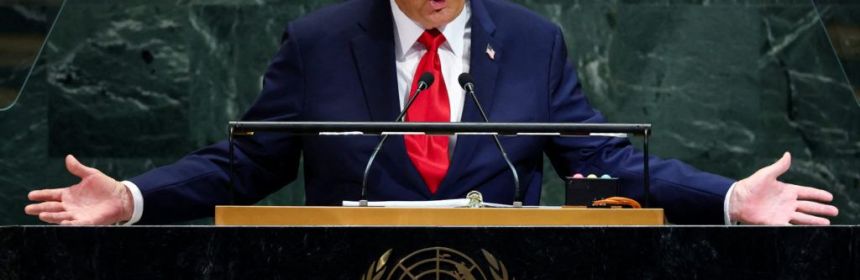
Trump Attacks UN Principles, Urges Halt to Migration and Climate Efforts

During his recent address at the United Nations General Assembly, President Donald Trump controversially challenged the organization’s foundational principles by calling on global leaders to curb migration and disregard climate change initiatives. This rhetoric not only contradicts essential global priorities but also reflects Trump’s inclination to prioritize his domestic agenda over international collaboration.

Trump’s remarks emphasized a perceived urgency to enhance national interests at the expense of collective action. He portrayed global migration as a crisis, which aligns with his history of xenophobic policies, further promoting a narrative that disregards human rights and humanitarian responsibility. His call for reduced migration resonates with his prior attempts to build walls, both physical and metaphorical, that alienate rather than unite nations.

The President’s focus on dismissing climate change efforts starkly contrasts scientific consensus and international commitments, undermining cooperative endeavors essential to future generations. This disregard exemplifies Trump’s consistent pattern of approaching complex global issues with simplistic solutions that neglect the nuances and important contributions of diplomacy and international cooperation.

By framing his domestic priorities as a universal model, Trump positions himself against the fundamental principles of the United Nations, which emphasize collaboration, equity, and sustainability. This stance not only alienates allies but also spurns collective efforts that have been pivotal in addressing pressing global challenges over the years.

Ultimately, Trump’s address exemplified a troubling shift towards isolationism and unilateralism, indicative of a larger trend within the Republican Party that seeks to distance the United States from its role as a multilateral leader. His approach threatens to unravel decades of progress in global governance aimed at fostering peace, security, and common wellness.

DHS Promotes ICE Jobs with Language Echoing White Nationalism and Trump-Era Rhetoric

A recent post by the Department of Homeland Security (DHS) promoting career opportunities within the Immigration and Customs Enforcement (ICE) agency has stirred intense backlash. The controversial message read: “Serve your country! Defend your culture! No undergraduate degree required!” This language has been widely viewed as a dog whistle to white nationalists, invoking troubling echoes of white supremacy.

The promotion from DHS reflects a growing trend of militarization within immigration enforcement, a strategy that many critics argue aligns with the fascistic tendencies of Trump-era politics. By framing immigration enforcement as a patriotic duty and emphasizing the defense of culture, the DHS implicitly legitimizes the nationalistic rhetoric that has fueled racial tensions in America.

This initiative continues to deepen divisions within the country, reinforcing the narrative that minority communities are a threat to a perceived homogenous “American” culture. This rhetoric is a clear attempt to mobilize a base that views immigration through a lens of fear and hostility, further entrenching systemic racism under the guise of national security.

The push for hiring within ICE using such provocative messaging not only raises ethical concerns but also risks inciting violence by legitimizing racist ideologies. The agency’s recent actions signal a troubling alignment with white nationalist sentiments and a disregard for the rights and humanity of immigrants.

As the Republican party aligns itself more closely with these extremities, it becomes increasingly clear that Trump and his allies are actively working to destabilize the principles of democracy and equality. This trajectory demands vigilance and active resistance from those who stand for justice and inclusion in America.

(h/t: https://www.dailykos.com/stories/2025/8/6/2337083/-Are-you-an-old-uneducated-racist-Join-the-ICE-gestapo-today)

Trump Administration’s EEOC Guidance Empowers Religious Freedom

In recent years, the rise of Diversity, Equity, and Inclusion (DEI) programs in corporate America has ignited significant debate, particularly regarding their treatment of religious beliefs. Approximately 70% of Americans identify with a religion, yet many DEI initiatives appear to overlook this demographic, raising concerns about potential discrimination. Employees, such as those at the Department of Agriculture, have faced situations where mandatory DEI training conflicted with their religious convictions, leading to allegations of discrimination against the very foundation of religious freedom.

Amid these developments, the Trump administration’s Equal Employment Opportunity Commission (EEOC) has issued new guidance aimed at addressing this oversight. This guidance suggests that workplace discrimination masked by DEI programs will not be tolerated. It emphasizes that Title VII of the Civil Rights Act of 1964 prohibits employment actions based on religion, while reiterating that there is no exceptions made for “diversity interests” that undermine religious rights.

The narrative is further complicated by individual cases, such as those involving Alaska Airlines employees Lacey Smith and Marli Brown, who were fired for expressing religiously grounded objections to the airline’s support of the Equality Act, which they believed threatened women’s rights. Their ongoing litigation highlights a concerning trend of organizations potentially prioritizing DEI initiatives over legitimate religious rights, and the recent EEOC guidance provides a path for similar claimants to seek justice.

Specific elements of the EEOC’s guidance clearly outline protections for religious workers, asserting that the law applies equitably to all employees. This shift towards recognizing religious discrimination within DEI frameworks is a significant advancement for religious freedom advocates. Notably, the guidance indicates that limiting workplace opportunities or segregating employees can qualify as discrimination, thus directly countering the ethos behind DEI practices that may exclude religious perspectives.

Overall, this development signifies a possible rekindling of religious liberty within the workplace, which many religious Americans hope will allow them to exercise their faith freely without fear of repercussion. This newfound attention to religious rights, bolstered by the Trump administration’s actions, represents a crucial moment for advocates aiming to protect foundational freedoms amidst an increasingly polarized sociopolitical climate.

Trump’s Executive Order Targets Smithsonian to Censor American History Insights

Donald Trump has issued an executive order that directly targets the Smithsonian Institution, asserting that it promotes what he deems “divisive, race-based ideology.” This controversial move, labeled “Restoring Truth and Sanity to American History,” aims to erase exhibitions that discuss racial themes by halting federal funding for such programs. The order mandates Vice President JD Vance to eliminate what Trump calls “improper” displays from the Smithsonian’s museums and the National Zoo, fundamentally censoring historical narratives.

The executive order seeks to restore federal properties that have “been improperly removed or changed,” a thinly veiled attack against attempts to showcase America’s complex history, particularly regarding race. Trump’s focus is not merely on museum exhibitions but extends to shaping the broader cultural narrative of the country, enhancing the authoritarian flavor of his presidency by controlling public memory and historical interpretation.

A significant point of contention within the order is the accusation against the planned American Women’s History Museum, falsely claiming it aims to “recognize men as women.” Additionally, Trump’s directive aims to delegitimize the National Museum of African American History and Culture, alleging that recognizing values like hard work and individualism as part of “White culture” is in itself divisive. These fabrications reveal an extremist ideology intended to repress accurate representations of America’s racial history.

Moreover, the executive order coincides with Trump’s broader strategy of dismantling diversity, equity, and inclusion initiatives across federal institutions, a campaign that has already faced numerous legal challenges. The aggressive nature of these actions showcases Trump’s intent to redefine American cultural institutions as platforms for ideological conformity rather than diversity and inclusion.

Overall, Trump’s executive order constitutes a direct assault on the intellectual and cultural diversity that characterizes American society. The effort to reframe the country’s history and diminish the significance of exhibitions that reflect upon its racial past is emblematic of a trend toward authoritarianism, echoing tactics employed by regimes seeking to reshape public narratives for political gain.

(h/t: https://www.bbc.com/news/articles/cdjy1jmvvwzo.amp)

El Salvador and Trump’s Immigrant Deportation Deal Undermines Human Rights and Legal Protections

El Salvador has entered into a controversial agreement with the Trump administration to house violent criminals and deportees from the United States, a move that raises serious legal and ethical concerns. This unprecedented pact was announced by U.S. Secretary of State Marco Rubio after his meeting with Salvadoran President Nayib Bukele. Critics have pointed out that this agreement prioritizes the desires of a repressive U.S. administration over the rights and well-being of individuals, reflecting the Trump administration’s ongoing war on immigrants.

The agreement entails that El Salvador will accept not only its own deportees but also any deportees classified as criminals from other nationalities, establishing a system where the U.S. could send incarcerated individuals to a nation notorious for its harsh treatment of prisoners. While Bukele pitches this as a cost-effective measure that would purportedly be financially beneficial for El Salvador, this approach effectively commodifies human lives, treating deportees as mere resources to be exchanged for governmental payments.

Legal experts have warned that the arrangement may violate fundamental legal principles in the U.S. Constitution, particularly those protecting citizenship rights. According to immigration law specialist Leti Volpp, U.S. citizens cannot be deported without a legal process that guarantees due process, which this plan complicates significantly. The assurance that any individuals sent to El Salvador would receive fair treatment is tenuous at best, given the documented human rights abuses occurring in Salvadoran prisons, which are overcrowded and lack basic sanitary conditions.

Human rights organizations and advocacy groups have condemned the agreement, emphasizing that it embodies a grim underpinning of Trump’s immigration policies—dehumanization and the disregard for international laws regarding the treatment of migrants. These analyses assert that this action not only threatens the well-being of marginalized groups but also exemplifies a broader trend of authoritarianism that has emerged under the Trump administration.

As the administration faces escalating backlash from human rights advocates and legal experts, the implications of this deal stress an alarming transformation of U.S. immigration practices that challenge the very foundations of democracy and humanity. By perpetuating such agreements, Trump and his administration demonstrate a clear inclination towards disturbing international norms and promoting systemic racism against migrants and those seeking refuge from violence.

(h/t: https://www.cnn.com/2025/02/03/americas/el-salvador-migrant-deal-marco-rubio-intl-hnk/index.html)

Trump Threatens Tariffs on Nations Challenging Dollar Dominance

Former President Donald Trump recently issued a striking ultimatum via social media, threatening ten countries with 100% tariffs should they attempt to replace the U.S. dollar as their reserve currency. This declaration showcases not only his authoritarian tendencies but also a dangerous ignorance of international economics. His comments are expected to escalate tensions with countries that are part of the BRICS coalition—Brazil, Russia, India, China, and South Africa—alongside others looking to establish their economic autonomy.

In his post, Trump declared, “The idea that the BRICS Countries are trying to move away from the Dollar… is OVER.” However, his grasp on international relations remains alarmingly shallow, as evidenced by a previous gaffe where he mistakenly identified Spain as a BRICS member. This staggering lack of knowledge undermines his credibility, especially in discussions that impact global economic structures and alliances.

Moreover, Trump’s threats reflect a broader pattern of aggressive nationalism that seeks to impose U.S. dominance through economic coercion. As he plans to impose additional tariffs on neighboring countries like Mexico and Canada, his actions jeopardize essential diplomatic relationships and undermine cooperative trade practices. This lack of understanding and willingness to engage in constructive dialogue signals a troubling trend of isolationism that threatens both U.S. and global economic stability.

Trump’s threats have not gone unnoticed internationally. According to reports, a Kremlin spokesperson suggested that such economic coercion would inevitably backfire, indicating that the world is increasingly wary of Trump’s unpredictable stance on trade. Furthermore, trade experts note that the dollar’s strength is largely attributed to the current U.S. economic conditions, which are not guaranteed to remain unchanged in the face of such reckless rhetoric.

This recent episode is just another instance highlighting Trump’s futile attempts to maintain an American hegemony that disregards the realities of a multipolar world. His administration’s erratic foreign policy moves represent a clear danger to the principles of diplomacy and international cooperation, ultimately revealing a commitment to authoritarianism that disregards the foundational tenets of democratic governance and productive global engagement.

(h/t: https://www.yahoo.com/news/another-sucker-nation-trump-fires-112635885.html)

Trump Halts All Foreign Aid, Threatening Global Humanitarian Efforts

The US State Department has officially suspended all existing foreign aid and put a halt to new assistance programs according to an internal memo that has been leaked. This unprecedented move follows an executive order signed by Donald Trump, placing a 90-day pause on foreign development assistance for a comprehensive review. The memo indicates that no new funds will be obligated, marking a significant reshaping of US foreign assistance policy.

The impact of this suspension is substantial, as the US is the largest international aid donor, disbursing $68 billion in aid in 2023 alone. The memo outlines that this freeze applies broadly across various aid types, ranging from humanitarian aid to military assistance, with few exceptions such as emergency food aid and military aid for Israel and Egypt. Notably, aid programs essential for global humanitarian initiatives may face immediate cessation, exacerbating suffering in regions already facing crises.

Former officials who served in the State Department have articulated grave concerns about the ramifications of this policy. Josh Paul, who held senior roles in Congressional relations and military aid, underscored that operations such as humanitarian de-mining programs could be abruptly halted, crushing efforts vital for safety and recovery in conflict-affected areas. This move signals a departure from historical American leadership in global humanitarian assistance.

Dave Harden, who has extensive experience with USAID, described the situation as “very significant,” stating that the freeze could impede numerous critical development projects including those focused on water and sanitation. He elucidated that employees from implementing partners would still be compensated, but essential assistance would be delayed or stopped, reflecting the recklessness of the current administration’s approach to foreign aid.

The justification provided in Rubio’s memo highlights a flawed rationale where existing commitments are deemed ineffective without further scrutiny by the newly assigned administration. Given the global humanitarian crises, including the urgent needs following the ceasefire in Gaza and other hunger emergencies worldwide, this drastic pause in aid under Trump’s direction can exacerbate conditions for millions in need, showcasing an alarming trend of isolationism and neglect under Republican leadership.

(h/t: https://www.bbc.com/news/articles/ce9nx5k7lv0o)

1 2 3 9