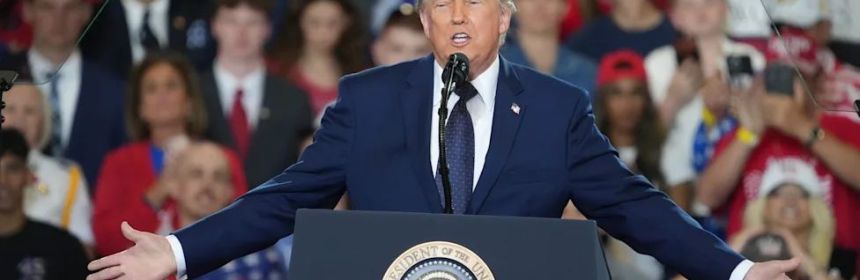
Trump believes diet soda kills cancer cells, Dr Oz reveals | Donald Trump | The Guardian

Trump claimed to Mehmet Oz, the Centers for Medicare and Medicaid Services chief, that diet soda kills cancer cells because it can kill grass when poured on it, suggesting the logic applies to cancer cells in the human body. Oz recounted the exchange on his son Donald Trump Jr.’s podcast “Triggered with Don Jr,” describing a moment aboard Air Force One when Trump defended his consumption of orange Fanta by making this assertion, later joking that the drink could not be unhealthy because it is “fresh squeezed.”

Multiple physicians publicly rejected Trump’s claim, emphasizing that no scientific evidence supports the notion that diet soda prevents or cures cancer. Pediatrician Zachary Rubin pointed out the logical fallacy in Trump’s reasoning, noting that by the same standard, bleach would be a superfood, and he referenced Trump’s pandemic-era suggestions about injecting disinfectants as evidence of similar flawed health reasoning. Emergency physician Owais Durrani issued a straightforward statement that diet soda does not kill cancer cells.

The scientific evidence on artificial sweeteners in diet soda is limited and concerning but does not support Trump’s claims. The International Agency for Research on Cancer classifies aspartame, the sweetener used in most diet sodas, as “possibly carcinogenic to humans” based on limited evidence, while a 2022 French cohort study found aspartame linked to a 15 percent higher cancer risk without establishing causation. Research also indicates that artificial sweeteners may harm gut health and microbial diversity, contradicting any protective effect.

Trump has consistently defended his diet of sweet drinks and fast food as part of his health regimen, with Oz characterizing his approach as eating junk food from major chains due to their quality control standards. Don Jr. suggested his father’s consumption habits might reflect something beneficial, citing Trump’s energy and stamina despite his age, effectively endorsing disproven health claims.

These remarks emerge as the health department works to update U.S. nutrition guidelines and revise dietary recommendations to emphasize “real food,” making Trump’s promotion of diet soda particularly problematic at a moment when federal health policy is being reshaped. The incident underscores the administration’s broader push toward alternative medicine narratives that prioritize unscientific claims over established medical consensus.

(Source: https://www.theguardian.com/us-news/2026/apr/15/trump-diet-coke-soda-kills-cancer)

Trump Threatens Iran War Crimes, Falsely Blames Media for Pilot Leak

During a Monday White House briefing, Trump used a press conference ostensibly about a successful pilot rescue to threaten extensive war crimes against Iran, including attacks on civilian infrastructure like bridges, power plants, and desalinization facilities. Trump falsely claimed that American journalists had revealed the downed pilot's location to Iran, when an Israeli journalist citing Iranian state media actually broke the story first, then demanded the identification and prosecution of the supposed leaker.

Trump reiterated threats to destroy Iran's civilian infrastructure after an 8 p.m. Tuesday deadline, stating "they're gonna have no bridges, they're gonna have no power plants" and describing the outcome as returning Iran to the "stone ages." When confronted about violations of post-World War II international law prohibiting attacks on civilian targets, Trump dismissed the concern and attacked the New York Times reporter who posed the question rather than address the substance of the war crimes allegation.

Trump claimed he had intercepted communications from Iranians urging the U.S. to continue bombing their neighborhoods, asserting they would "suffer that in order to have freedom" under his campaign to weaken Iran's government. He also proposed that the U.S. could charge "tolls" for shipping through the Strait of Hormuz, framing such extraction as payment for a war he claimed the U.S. had already won, despite ongoing conflict.

CIA Director John Ratcliffe and Secretary of Defense Pete Hegseth spent the briefing praising Trump for ordering a routine rescue mission as if it were an extraordinary achievement, with Hegseth claiming the current bombing campaign represents the "largest volume" of munitions dropped on Iran since the war began. Trump also employed a racist slur during the event, underscoring the press conference's chaotic and inflammatory tone.

Iranian Foreign Ministry spokesperson Esmaeil Baghaei rejected a U.S. ceasefire proposal and stated that Iran is reviewing a Pakistani-authored pause plan ahead of Trump's deadline. Baghaei emphasized that negotiations are incompatible with ultimatums and threats to commit war crimes, and that Iran would release its formal response in due time.

(Source: https://www.independent.co.uk/news/world/americas/us-politics/trump-iran-press-conference-war-crime-threats-b2952604.html)

Trump Admits Avoiding War Term to Bypass Congress

Trump has spent the week openly explaining why he avoids calling the military campaign in Iran a “war,” revealing that legal and political considerations drive the terminology shift. Trump initially told supporters Tuesday that he stopped using the word “war” because “people don’t like” it and that Democrats use the term instead. By Friday, speaking at the Future Investment Initiative Priority Summit in Miami Beach, Trump elaborated extensively on the reasoning, stating that calling military action a “war” requires congressional approval, whereas a “military operation” does not.

During his remarks, Trump contradicted himself repeatedly, using the word “war” while simultaneously insisting he calls the Iran campaign a “military operation” for legal reasons. Trump explicitly stated, “As a war, you’re supposed to get approval from Congress, something like that. So I call it a military operation.” This admission exposes the abuse of power underlying the semantic rebranding, as Trump attempts to circumvent constitutional requirements for congressional authorization by simply changing the name of military action.

Trump’s pattern reflects a broader effort to avoid institutional constraints on executive military power. Earlier in the week at the National Republican Congressional Committee’s fundraising dinner, Trump told attendees that unnamed advisors advised against using the word “war” because it creates problems, so he would adopt “military operation” instead. The president acknowledged that the term change is motivated entirely by political and legal avoidance rather than accuracy in describing the ongoing military campaign.

This manufactured distinction between terminology contradicts fundamental constitutional structure, which grants Congress sole power to declare war. By unilaterally choosing language that sidesteps this requirement, Trump demonstrates a pattern of circumventing legislative oversight. The repeated, detailed explanations of this strategy suggest Trump recognizes the legal exposure but is proceeding anyway, prioritizing executive autonomy over constitutional checks and balances.

(Source: https://www.mediaite.com/media/news/trump-goes-on-stunning-new-riff-about-not-saying-war-in-speech-to-investors/)

Trump Confuses Civil War, Reconstruction as Same Historical Event

During a rally in Corpus Christi, Texas, Trump conflated the Civil War with Reconstruction, claiming the latter was simply “a fancy way of saying the Civil War.” Trump stated that Texas Governor Greg Abbott used the term “Reconstruction” in a phone call, and Trump then demanded clarification, asserting the two historical periods were identical.

Reconstruction was the distinct period following the Civil War in which former Confederate states were readmitted to the Union and forced to comply with the Constitution and federal law, including the 13th, 14th, and 15th amendments that abolished slavery, granted citizenship to all persons born in the U.S., and prohibited racial discrimination in voting. The period involved federal troop deployments to enforce these requirements until 1877, when the disputed presidential election of 1876 was resolved through a political deal that ended Reconstruction.

Trump’s mischaracterization of basic American history reflects his documented pattern of factual inaccuracy on major historical events. The disinformation he spread at the rally contradicts established historical consensus and educational standards regarding these critical periods of American civil rights development.

The rally also featured other remarks demonstrating Trump’s pattern of incoherence. Trump congratulated Republican Representative Tony Gonzales without explanation, despite Gonzales facing resignation calls after a former staffer’s suicide, reportedly linked to an affair with the lawmaker. Trump also recounted an implausible anecdote about a police officer crediting improved sex life to economic conditions.

Trump used the event to promote his energy policies ahead of Texas primary elections. His comments on a hypothetical Supreme Court nomination of Senator Ted Cruz reflected crude characterizations rather than substantive judicial analysis, describing Cruz as “a pain in the ass” to other senators.

(Source: https://www.mediaite.com/media/tv/confused-trump-says-the-civil-war-and-reconstruction-were-the-same-thing-a-fancy-way-of-saying-the-civil-war/)

Trump Expels Media From Governors Meeting To Hide Policy Disputes

President Donald Trump expelled journalists from a White House governors meeting on February 20, 2026, instructing media to leave so discussions could proceed “very candidly.” Trump stated directly to assembled reporters, “We’re going to be asking the press to leave,” before White House communications staff ushered them out, with some pressing questions before being removed.

Trump’s official social media account mocked the press expulsion, posting that he had “kicked them out” after inviting them, characterizing reporter questions as “stupid.” This move prevented public scrutiny of a meeting where Trump had initially excluded Democratic governors Jared Polis of Colorado and Wes Moore of Maryland over political disagreements before reversing course under pressure and extending invitations.

CNN’s Wolf Blitzer stated he could not recall a president officially inviting media into a formal meeting only to expel them, calling the action “extraordinary.” Correspondent Kevin Liptak reported Trump may have sought to hide contentious exchanges with governors, referencing a prior governors summit dispute where Maine Governor Janet Mills confronted Trump over an executive order withholding federal funding related to transgender sports participation and pledged to challenge him in court.

The exclusion of press from a bipartisan governors meeting demonstrates Trump’s pattern of restricting public access to government proceedings and suppressing media inquiry into policy disagreements. By barring journalists, Trump prevented documentation of disputes between his administration and state leaders on federal funding and regulatory matters.

(Source: https://www.mediaite.com/media/news/trump-shockingly-asks-media-to-leave-as-governors-breakfast-meeting-kicks-off-that-way-we-will-talk-very-candidly/)

Trump Dozes at Board of Peace Summit with World Leaders

President Trump, 79, repeatedly appeared to close his eyes and nod off during Thursday’s inaugural “Board of Peace” meeting in Washington, DC, with cameras capturing him with his eyelids shut as world leaders including former British Prime Minister Tony Blair and leaders from Kuwait and Bahrain addressed the gathering. Trump had spoken for over 45 minutes before taking his seat, and at one point jolted upright when applause erupted, snapping his eyes open, while at other moments he sat slumped to the side with his eyes closed during speakers’ remarks.

When confronted about similar incidents at previous White House meetings and Cabinet gatherings, Trump defended himself by claiming the cameras caught him merely blinking and dismissing one earlier meeting as “pretty boring,” contradicting video evidence of extended eye closure. Trump stated he had not actually slept through a December Cabinet meeting, though footage showed him with his eyes shut for extended periods during official proceedings.

Trump had declared the “Board of Peace” event “the most consequential board” with “the greatest world leaders,” yet his apparent inattention throughout the three-hour gathering contradicted this characterization. At the event’s conclusion, Trump remained seated while signing fundraising pledge documents, then handed them to others to hold and distributed pens as though conducting a ceremonial bill-signing.

Trump’s pattern of closing his eyes during meetings with top officials and world leaders, combined with his late-night social media posting sessions, has prompted questions about his cognitive state and fitness for office at age 79, making him the oldest president ever elected.

(Source: https://www.yahoo.com/news/articles/trump-79-jolts-awake-struggling-164937807.html)

Trump Deflects on Minneapolis Killings with Incoherent Water Response

During a Wednesday interview with NBC Nightly News anchor Tom Llamas at the White House, Trump responded incoherently to questions about the fatal shootings of Renee Nicole Good and Alex Pretti in Minneapolis. Trump stated he was “not happy with the two incidents” but focused instead on criticizing the negative publicity surrounding Immigration and Customs Enforcement, pivoting to comments about U.S. naval operations in the Caribbean targeting drug boats.

When Llamas asked Trump directly about the Minneapolis killings, Trump deflected by claiming “nobody talks about all of the murderers that we’re taking out of our country” and shifted the conversation to offshore operations. Trump’s non-sequitur response about “the waters where we knock out boats” left the interviewer visibly confused, with Llamas repeating back “The — the — the waters?” in evident bewilderment before attempting to move forward with the interview.

The deflection exemplifies Trump’s pattern of evading accountability for federal law enforcement actions. An FBI supervisor resigned after the Trump administration pressured her to abandon a civil rights investigation into the Good shooting, while federal prosecutors simultaneously subpoenaed Minnesota Democratic officials in what constitutes politicized weaponization of the Justice Department.

Trump has also made unsubstantiated claims that a woman protesting the shooting was a “paid agitator” without evidence, and his administration has appealed court orders restricting ICE retaliation against peaceful Minneapolis protesters. These actions demonstrate the administration’s strategy of suppressing investigation and accountability while attacking those documenting federal actions.

Trump’s confused response during the Llamas interview reflects his administration’s broader refusal to address substantive questions about fatal law enforcement incidents, instead treating inquiries as opportunities to promote unrelated policy talking points and attack critics.

(Source: https://www.independent.co.uk/tv/news/trump-ice-minneapolis-shootings-interview-nbc-video-b2914752.html)

Trump Denies $2K Tariff Check Promise Despite November Announcement

President Trump denied making a promise to distribute $2,000 tariff rebate checks to Americans when questioned by The New York Times on January 11, 2026, asking “When did I do that?” despite having publicly introduced the idea in early November 2026 on Truth Social. Trump later acknowledged the checks were planned, stating the tariff revenue collected is “so substantial” that he would issue $2,000 checks “toward the end of the year,” and claimed no Congressional approval would be required.

In November, Trump announced Americans would receive “a dividend of at least $2000 a person (not including high-income people!)” funded by tariff collections he claimed would reach “Trillions of Dollars.” The Committee for a Responsible Federal Budget estimated the government would need approximately $600 billion to issue such checks. However, Treasury Secretary Scott Bessent told ABC News on November 12 that he and Trump had not discussed the tariff rebate possibility, and later advised Americans to save the funds to avoid inflation.

Trump’s tariff policy faces legal scrutiny, with cases pending before the Supreme Court regarding whether the tariffs violate the International Emergency Economic Powers Act (IEEPA). Trump previously falsely attributed $1,776 “Warrior Dividend” payments to service members to tariff revenue, when the funds actually derived from Congressional appropriations. If the Supreme Court rules the tariffs illegal, the Treasury Department would refund approximately $774 billion collected, with repayment potentially spread over weeks or a year.

Trump’s claim to unilaterally distribute tariff revenue without Congressional approval contradicts established fiscal law requiring legislative authorization for government expenditures. The shifting timeline—from an undefined date in November to “toward the end of the year” in January—and his initial denial of the promise demonstrate the absence of a concrete plan. Trump has similarly made unilateral economic directives without legislative or procedural authorization, including ordering representatives to purchase $200 billion in mortgage bonds to lower housing costs.

The discrepancy between Trump’s initial November announcement and his January denial, combined with the absence of a detailed distribution mechanism and Bessent’s explicit contradiction, indicates the tariff rebate remains an unfulfilled campaign-style promise dependent on uncertain tariff collections and unresolved legal challenges to the tariff policy itself.

(Source: https://people.com/trump-asks-when-did-i-do-that-when-asked-about-sending-americans-2k-tariff-checks-11884184?utm_campaign=peoplemagazine&utm_content=photo&utm_medium=social&utm_source=facebook.com&utm_term=6965c2e5490dd2000189e8c3&fbclid=IwdGRleAPS4wpleHRuA2FlbQIxMQBzcnRjBmFwcF9pZAo2NjI4NTY4Mzc5AAEeFyrAxSrIgq2CeX5Yw6brG7rJkPekajqBm2cQ5dveBEOMvcqnR6VLAQwzp3M_aem_ljbHllP-Gcm_wwfEaMjG6Q)

Trump Gets Up, Walks Away From Meeting To Stare Out Window At Ballroom

During a Friday meeting with oil executives from Exxon and Chevron at the White House, President Donald Trump abruptly left his seat to stare out a window at the construction of his new ballroom project. Trump stood for approximately 20 seconds admiring the work, telling his guests “Wow, what a view. This is the door to the ballroom,” before returning to his seat next to Vice President JD Vance and Secretary of State Marco Rubio.

Trump used the interruption to promote the ballroom’s scale, claiming it would accommodate over 1,000 people compared to current White House meeting rooms. He stated the project was “ahead of schedule” and “under budget,” despite the White House significantly raising its cost estimate from $200 million to $400 million in recent months. Trump told the executives, “I don’t think there’ll be anything like it in the world, actually.”

The ballroom required demolition of the East Wing and is being funded by private donations, including contributions from Trump himself and major technology companies such as Apple, Amazon, Microsoft, Google, Coinbase, and Meta. Trump emphasized the facility’s security features, noting it would include “bulletproof glass, drone-proof ceilings and everything else” needed for modern operations and inaugurations.

Trump has previously acknowledged the ballroom functions as a personal monument he is “building to himself because no one else will.” His fixation on the project has extended to attacking journalists who question its costs and scope, having verbally assaulted CNN’s Kaitlan Collins and criticized Reuters correspondent Jeff Mason for raising questions about the project’s transparency and extent.

(Source: https://www.yahoo.com/news/articles/trump-gets-walks-away-meeting-221107280.html)

Marco Rubio Slides Private Note to Donald Trump During Televised Press Conference. Trump Looks Down and Reads It Aloud

During a White House press conference on January 9, 2026, President Donald Trump read aloud a private handwritten note from Secretary of State Marco Rubio in front of oil and gas executives, exposing Rubio’s internal directive. The note instructed Trump to “go back to Chevron” to discuss company matters, revealing Rubio’s attempt to manage Trump’s attention during the meeting.

Trump announced the note’s existence to the room before reading it verbatim, causing visible discomfort for Rubio, who appeared to regret the public exposure of his written instruction. Vice President JD Vance was visibly amused by the incident, laughing as Rubio smiled uncomfortably. Trump then patted Rubio on the back and thanked him, apparently unaware of the breach of confidentiality or its implications.

This incident is not Trump’s first encounter with Rubio’s written directives. In October 2025, photographers captured another note in which Rubio instructed Trump to “approve” a Truth Social post announcing an Israel-Hamas peace agreement, suggesting Trump did not draft the statement himself. Trump acknowledged the note publicly at that meeting as well, stating he was “very well represented” by Rubio.

The pattern of Trump publicly disclosing private notes from his Secretary of State demonstrates a lack of operational discipline and respect for confidential communication channels. Rubio’s repeated need to issue written instructions suggests the President requires constant guidance on procedural matters and media strategy.

(Source: https://www.yahoo.com/news/articles/marco-rubio-slides-private-note-230443426.html)

1 2