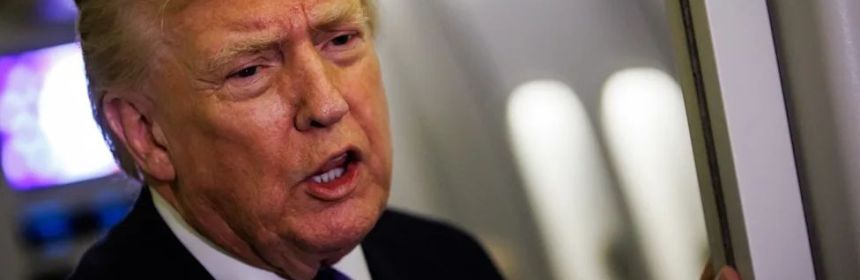
Trump Claims He Screamed at Macron Over Drug Price Tariffs

President Donald Trump claimed during a campaign event in Rome, Georgia on Thursday that he screamed at French President Emmanuel Macron during a phone call, threatening him with 100% tariffs on wine and champagne until Macron agreed to raise drug prices in France. Trump stated he called multiple world leaders with similar ultimatums, describing Macron as capitulating to his demands after the tariff threat, though Trump provided no verification of these conversations occurring.

Trump used the alleged exchange to promote his second-term drug pricing claims, stating he has reduced American drug costs by “400, 500, even 600%” by forcing other nations to lower their prices. He characterized the situation as necessary because the United States had been paying the highest drug prices globally and his intervention allegedly brought American prices to match the world’s lowest rates.

MSNBC host Lawrence O’Donnell directly contradicted Trump’s account, calling it “pure hallucination from start to finish” and noting that French presidents lack direct control over their country’s drug pricing, which is determined through regulatory and legislative processes. O’Donnell stated Trump fabricated the conversation entirely and that everyone in the cabinet room where Trump previously told the story knew it was false.

Trump has previously publicized private communications with Macron, including posting the French president’s text message to Truth Social in January 2026, where Macron explicitly rejected Trump’s Greenland annexation ambitions. This history of weaponizing communications with allies undermines credibility in his current claims about negotiating drug prices through coercion.

(Source: https://www.mediaite.com/media/news/youre-gonna-do-it-trump-says-he-screamed-at-macron-in-wild-phone-call/)

Trump Weighs Limited Iran Strike to Force Nuclear Deal

President Trump is weighing an initial limited military strike against Iran designed to force compliance with his demands for a nuclear deal, according to reporting from people familiar with the matter. The opening assault, if authorized, could occur within days and would target select military or government sites as a pressure tactic rather than a full-scale invasion.

Trump stated during a Board of Peace meeting that a decision on Iran could come within the next 10 days, indicating he is considering a range of military options while claiming he still prefers diplomacy. The strategy outlines a two-stage escalation: a limited initial strike followed by a broad campaign against regime facilities if Iran refuses to abandon its nuclear enrichment program.

The proposal demonstrates Trump’s pattern of threatening military action to extract concessions from adversaries, mirroring his deployment of a massive armada to Iran and threatening escalated military strikes if the regime does not comply with nuclear demands. This escalatory approach subordinates diplomatic channels to coercive military pressure as the primary negotiating tool.

The second phase of Trump’s strategy explicitly contemplates regime change, with potential U.S. operations aimed at toppling the Tehran government if Iran continues nuclear enrichment activities. This fundamentally transforms the stated objective from nuclear compliance into broader geopolitical restructuring of Iran’s government.

(Source: https://www.wsj.com/world/middle-east/trump-hints-at-10-day-window-for-decision-on-iran-6370e477?st=fjbZxr&reflink=article_copyURL_share)

NATO Transfers Commands to Europe, Cuts U.S. Leadership Roles

NATO announced the transfer of two Joint Force Commands from U.S. to European leadership, with the United Kingdom assuming command of Norfolk, Virginia’s Joint Force Command and Italy taking control of Joint Force Command Naples. The shift, expected to occur gradually over the coming years, follows President Trump’s demands that European allies assume greater responsibility for continental defense. A Pentagon official stated the decision was “made jointly among all allies” and strengthens the alliance by demonstrating European leadership in European defense.

The Trump administration’s National Defense Strategy, released last month, mandates that NATO allies assume primary responsibility for Europe’s defense while the U.S. prioritizes homeland defense and deterring China. Under Secretary of Defense for Policy Elbridge Colby, the strategy’s lead author, is attending this week’s NATO Defense Ministerial in place of Defense Secretary Pete Hegseth, marking the first such ministerial Hegseth has skipped since taking office. The U.S. will retain the position of Supreme Allied Commander Europe (SACEUR), currently held by Air Force General Alexus G. Grynkewich, who leads 80,000 U.S. service members in European Command.

Once implemented, all three Joint Force Commands directing operational crises will be under European control, while the U.S. assumes leadership of the Allied Maritime Command, currently led by a U.K. vice admiral. Germany and Poland will share rotational command of Joint Force Command Brunssum. The Norfolk facility housing one command will remain under U.S. Navy control despite the change in operational leadership, preserving American infrastructure presence on the continent.

The command restructuring reflects Trump’s stated priority of reducing U.S. military commitments abroad and shifting costs to allied nations. NATO’s announcement preceded this week’s defense ministerial meeting, where Trump administration officials will face European counterparts regarding defense spending increases and strategic burden-sharing arrangements.

(Source: https://www.cbsnews.com/amp/news/nato-to-shift-2-commands-from-us-to-european-leadership/)

Trump Blocks Bridge After Billionaire Competitor Meets Commerce Secretary

Donald Trump threatened to block Canada’s Gordie Howe International Bridge hours after Commerce Secretary Howard Lutnick met privately with Detroit billionaire Matthew Moroun, who controls the competing Ambassador Bridge, according to The New York Times. Two officials briefed on the meeting confirmed Lutnick met with Moroun in Washington on Monday, and Lutnick subsequently spoke with Trump by phone about the matter.

The Moroun family has spent decades attempting to prevent the Gordie Howe bridge through litigation and lobbying, including a challenge that reached Canada’s Supreme Court. The family previously urged Trump to halt construction of the $4.7 billion publicly funded bridge, which will compete with the Ambassador Bridge for over $300 million in daily cross-border trade once operational.

Trump posted on Truth Social threatening to block the bridge unless Canada addressed “a long list of grievances,” according to the Times report published Tuesday. White House Press Secretary Karoline Leavitt defended Trump’s position by claiming he was “putting America’s interest first,” objecting to Canadian control of the bridge and land on both sides, and criticizing insufficient use of American-made materials.

The timing coincides with escalating tension between the nations since Trump’s election, during which he has questioned Canadian sovereignty and imposed tariffs on steel, lumber, and automobiles. The Gordie Howe bridge is fully financed by Canada and will be jointly operated by Canada and Michigan, making Trump’s threat an intervention in a cross-border infrastructure project already under construction.

(Source: https://www.rawstory.com/trump-canada-2675257271/)

NATO Shifts Two Commands to European Leadership Amid Trump

NATO announced the transfer of two Joint Force Commands from U.S. to European leadership in response to President Trump’s demands that European allies assume greater responsibility for continental defense. The United Kingdom will assume command of the NATO Joint Force Command in Norfolk, Virginia, which oversees Atlantic and Arctic protection, while Italy takes control of Joint Force Command Naples and Germany and Poland will rotate command of Joint Force Command Brunssum. These transitions, occurring over the next several years, will place all three operational joint force commands under European leadership.

The Trump administration’s National Defense Strategy, released last month, explicitly directs NATO allies to prioritize European defense while the U.S. focuses on homeland defense and countering China. Under Secretary of Defense for Policy Elbridge Colby, the strategy’s lead author, is attending this week’s NATO Defense Ministerial instead of Defense Secretary Pete Hegseth, marking the first such ministerial Hegseth has skipped since taking office. A Pentagon official stated the command transfers were “made jointly among all allies” and strengthen the alliance by demonstrating European leadership capacity.

The U.S. will retain supreme allied commander Europe (SACEUR), a position historically held by American officers, and will assume leadership of the Allied Maritime Command, currently led by a British vice admiral. This arrangement ensures the U.S. continues directing all three functional commands—Allied Maritime Command, Allied Land Command, and Allied Air Command—while ceding operational control of crisis-response commands to European nations. Air Force General Alexus G. Grynkewich currently commands NATO’s 80,000 U.S. service members in the European theater as supreme allied commander.

NATO framed the restructuring as a mechanism for “more fairly sharing responsibility” and demonstrating U.S. commitment to alliance leadership despite the devolution of operational authority. The command transfer from Norfolk will retain U.S. Navy control of the larger installation housing the facility, preserving American infrastructure dominance even as command authority shifts. The phased implementation allows gradual adjustment of command structures across allied nations.

(Source: https://www.cbsnews.com/amp/news/nato-to-shift-2-commands-from-us-to-european-leadership/)

Trump Officials Meet Alberta Separatist Group Seeking $500B

Officials from the Trump administration held three secret meetings in Washington since April with leaders of the Alberta Prosperity Project, a far-right Canadian separatist organization seeking independence for Alberta. The group claims to have met with “very, very senior” U.S. government officials and plans to request a $500 billion credit facility, according to reporting on these clandestine encounters.

Both the White House and State Department have publicly denied making any commitments or pledges to the separatist group. A spokesperson stated explicitly that no support or other assurances were conveyed during any interactions, contradicting the Alberta Prosperity Project’s claims about the scope and substance of the meetings.

These meetings occurred amid escalating U.S.-Canada tensions, including remarks by a Treasury Secretary about Alberta’s independence and threats regarding tariffs and Canadian sovereignty. The timing demonstrates the Trump administration’s willingness to entertain conversations with fringe separatist movements while maintaining official denials of substantive engagement.

Public opposition to Alberta separation remains strong within the province itself, with an Alberta government spokesperson noting most residents oppose independence. A counter-petition against separation collected significantly more signatures than those supporting the separatist cause, undercutting the group’s claim to represent popular sentiment.

(Source: https://www.independent.co.uk/bulletin/news/alberta-canada-separatist-group-trump-officials-b2910271.html)

Trump Deploys Massive Armada to Iran Threatening Military Escalation

President Trump announced on Truth Social Wednesday that a “massive Armada” is en route to Iran, demanding the regime negotiate and threatening escalated military strikes. Trump stated the fleet is “moving quickly, with great power, enthusiasm, and purpose,” and explicitly warned that “the next attack will be far worse” if Iran does not comply with his demand for a nuclear weapons-free agreement.

Trump referenced a prior military operation against Iran called “Operation Midnight Hammer,” describing it as “a major destruction of Iran,” and framed the current deployment as leverage to force Iranian leadership to “Come to the Table” and accept his terms. He invoked artificial urgency, declaring “Time is running out, it is truly of the essence,” while using characteristic ultimatums demanding Iran “MAKE A DEAL!”

The military escalation coincides with ongoing civil unrest in Iran, where reports document thousands of deaths during protests. Trump previously threatened military intervention to support demonstrators, then reversed course by claiming “the killing in Iran is stopping” and signaling openness to negotiation with Iranian rulers—a pattern demonstrating his willingness to weaponize humanitarian crises for geopolitical leverage.

Trump made similar threats to reporters aboard Air Force One returning from Davos last week, stating “We’re watching Iran” and confirming that ships were being repositioned “just in case.” These repeated warnings escalate tensions through military posturing while Trump simultaneously presents himself as open to diplomatic resolution, a contradiction characteristic of his pattern of weaponizing foreign relations for domestic political effect.

(Source: https://www.mediaite.com/media/news/trump-reveals-hes-sending-massive-armada-to-iran-warns-regime-next-attack-will-be-far-worse/)

Trump Threatens 100% Canada Tariffs Over China Trade Deal

President Trump threatened Canada with 100 percent tariffs on all goods if Prime Minister Mark Carney proceeds with a strategic partnership deal with China. Trump wrote on Truth Social that Canada would become a “Drop Off Port” for Chinese products entering the U.S. market, claiming China would “eat Canada alive” and destroy its economy if such an agreement moved forward. Trump’s threat directly contradicted his earlier public statement that Carney “should be doing” and that a trade deal would be “a good thing for him to sign.”

Carney announced the China partnership earlier this month, which includes plans for China to lower canola tariffs to 15 percent by March 1, while Canada permits 49,000 Chinese electric vehicles into its market. The agreement emerged following Carney’s first visit to China by a Canadian prime minister in nearly a decade and focuses on expanding trade in agriculture, energy, and finance between the two nations.

Trump’s tariff threat followed Carney’s speech at the World Economic Forum in Davos, Switzerland, where the prime minister warned of “an era of great power rivalry” and declared that the U.S.-led global order was finished and “not coming back.” Without naming Trump directly, Carney’s remarks functioned as a direct rebuke of the president’s tariff regime, his previous demands to annex Canada as the 51st state, and his efforts to acquire Greenland.

Days after Carney’s speech, Trump retaliated by disinviting Canada from his newly established “Board of Peace,” which he described as “the most prestigious Board of Leaders ever assembled.” Trump wrote on Truth Social that the board was “withdrawing its invitation” to Canada, contradicting earlier reports that Carney had planned to accept membership in the organization, which Trump positioned as central to addressing Gaza.

Trump’s escalating threats demonstrate his use of tariffs and exclusion as political weapons against allies who pursue independent diplomatic initiatives. The confrontation underscores Trump’s demand for absolute deference from neighboring nations and his willingness to weaponize trade policy against countries that resist his territorial and geopolitical ambitions.

(Source: https://www.independent.co.uk/news/world/americas/us-politics/trump-tariffs-china-canada-carney-deal-b2906976.html)

Trump Chairs New Board of Peace, Isolates Western Allies

President Donald Trump signed a charter establishing his “Board of Peace” at the World Economic Forum in Davos, Switzerland on January 23, 2026, positioning himself as permanent chairman of the body. Trump declared the board “one of the most consequential bodies ever created,” though major Western allies including the United Kingdom, France, Norway, Sweden, and Slovenia declined to participate, citing concerns about the organization’s structure, mandate expansion beyond Gaza, and the involvement of authoritarian figures like Vladimir Putin.

The board’s charter grants Trump chairmanship that can only be terminated through his voluntary resignation or unanimous Executive Board vote determining incapacity—a provision that effectively insulates him from removal. Countries contributing over $1 billion receive permanent membership status, while standard members serve three-year terms, creating a two-tiered system based on financial commitment that blurs governance with fundraising.

More than 20 countries, including Argentina, Turkey, Hungary, Israel, Qatar, Pakistan, and Azerbaijan, committed to joining, while Russia and China received invitations without confirming participation. Trump withdrew Canada’s invitation after a dispute with Prime Minister Mark Carney, and Belgium publicly denied signing despite initial White House claims of its participation, undermining the organization’s credibility before its formal launch.

Secretary of State Marco Rubio, special envoy Steve Witkoff, Jared Kushner, Tony Blair, and World Bank President Ajay Banga form the founding Executive Board under Trump’s direct authority. Rubio contrasted the board’s promised “action” against the United Nations’ “strongly worded statements,” signaling Trump’s intent to position this body as a replacement framework for international conflict resolution independent of existing multilateral institutions.

France explicitly stated the board’s charter “goes beyond the sole framework of Gaza and raises serious questions” about undermining United Nations principles, while British Foreign Secretary Yvette Cooper documented objections to Putin’s potential participation in a peace mechanism given his active war in Ukraine. The selective membership and Trump-controlled structure demonstrate an attempt to construct an alternative international order bypassing democratic oversight and established diplomatic norms.

(Source: https://www.nbcnews.com/world/europe/trump-board-of-peace-countries-davos-cost-nato-what-know-rcna255433)

Trump Suggests Switzerland Tariffs Stemmed From Friction With Swiss President – The New York Times

President Trump disclosed that he imposed a 39 percent tariff on Switzerland in August 2024 after a personal dispute with then-President Karin Keller-Sutter during a phone call he characterized as adversarial. Trump stated he initially planned a 30 percent rate but increased it to 39 percent after Keller-Sutter repeatedly objected, saying her repetitive pushback and aggressive tone “rubbed me the wrong way.” The tariff far exceeded rates negotiated with the European Union at 15 percent and Britain at 10 percent, revealing that personal friction—not trade policy analysis—determined the rate.

Trump recounted that Keller-Sutter emphasized Switzerland’s small size and inability to absorb such tariffs, to which Trump responded by referencing the U.S. trade deficit with the country. The Swiss central bank had noted that gold bullion and bars—which comprised roughly two-thirds of Swiss exports to the United States at that time—should not be counted in trade balance calculations, undermining Trump’s rationale. Trump’s acknowledgment that the tariff was retaliatory rather than economically justified contradicts any legitimate trade policy framework.

After the rate hike, Trump said “all hell really broke out” and that Rolex and other Swiss representatives lobbied to reduce the tariff. Trump eventually cut the rate to 15 percent, matching the European Union’s rate. Keller-Sutter’s presidential term ended in December, and Trump later remarked that Switzerland exists only because of U.S. support, stating “They’re only good because of us,” a comment that prompted gasps from World Economic Forum attendees in Davos.

Trump’s public explanation reveals how personal grievance and authoritarian impulse shape his trade decisions rather than coherent economic strategy. Using tariffs as punishment for perceived disrespect weaponizes trade policy as a tool for enforcing personal loyalty, establishing a pattern where foreign leaders must defer to Trump’s demands or face economic retaliation regardless of factual merit or proportionality.

(Source: https://www.nytimes.com/2026/01/21/us/politics/trump-switzerland-tariffs-personal-friction.html)

1 2 3 26