Trump Claims He’s Finding Money That Doesn’t Exist

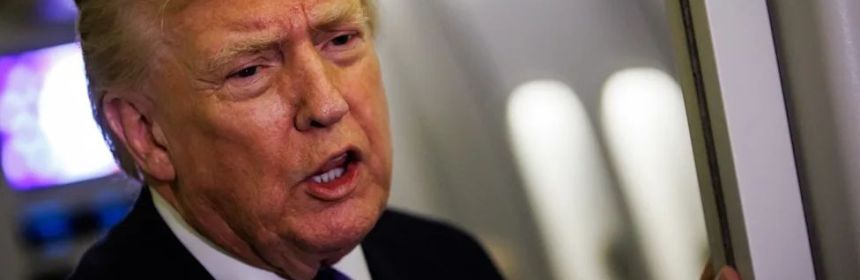
President Donald Trump recently claimed that his administration is discovering previously unseen money, particularly from tariffs, during a bizarre press interaction. When asked about renegotiating the United States-Mexico-Canada Agreement (USMCA), Trump misrepresented the expiration date, incorrectly stating that it would end in a year; in fact, it remains valid until 2036.

Trump went on to make unfounded assertions about “finding money” through tariffs he imposed, referencing an imaginary $30 billion that he claimed came from the “tariff shelf.” This chaotic narrative included Trump suggesting that officials confirmed to him that the tariffs were unexpectedly generating revenue, even though they were reportedly set to commence later.

The president expressed his hope that the Supreme Court would uphold the legality of his tariffs, despite skepticism from several justices regarding the extent of the president’s unilateral authority to impose them. Dismissing those who challenge his tariff policies, Trump labeled them as “bad people,” showcasing his typical incendiary rhetoric.

These comments reflect Trump’s continuing trend of misleading statements regarding economic policies and their implications, raising questions about the veracity of his claims amid increasing scrutiny of his administration’s economic practices.

As political observers note, Trump’s attempts to paint a rosy economic picture are at odds with the realities of national debt and the complex nature of trade agreements, further emphasizing the need for accountable governance.

(Source: https://www.mediaite.com/media/tv/trump-bizarrely-claims-his-administration-is-finding-money-that-nobody-realized-ever-existed/)

Trump’s Panic as Supreme Court Reviews His Tariffs

President Donald Trump launched into a frantic tirade on social media, calling on his supporters to pray for the Supreme Court’s favorable ruling on his tariff policies. During this rant, he labeled critics of his trade approach as “evil, American hating forces,” demonstrating his growing desperation as legal challenges threaten his presidency.

Trump claimed that his implementation of tariffs has restored America’s international respect, saying, “Without which we would be a poor and pathetic laughingstock again.” Experts, however, predict that the Supreme Court may find his tariffs illegal, which could lead to significant financial repercussions and calls for the U.S. to return collected revenues.

The president’s assertions hinge on the argument that the International Emergency Economic Powers Act provides him with expansive authority to impose tariffs during perceived emergencies. Trump’s rhetoric indicates a fear that losing these tariffs could lead to a weakening of the U.S. economy, with warnings that it could fall to “almost Third World status.”

His social media posts touted claims of economic strength, boasting about low inflation and high stock market performance, while framing the tariffs as critical to national security and economic prosperity. The contradictory stance shows Trump’s attempt to divert attention from the real threats posed by his policies.

This alarming display reveals a president unwilling to confront the legal ramifications tied to his trade decisions, instead resorting to emotional pleas and inflammatory language. As his reliance on tariffs faces scrutiny, Trump’s narrative becomes increasingly detached from economic realities and grounded in fearmongering.

Trump Repeals Tariffs on Beef and Coffee to Lower Grocery Prices

Donald Trump has announced the repeal of tariffs on beef, coffee, and tropical fruits, a move that appears driven by his desire to present an image of reducing grocery prices amidst growing inflation. This decision comes amid criticism that his past tariff impositions have severely affected various sectors, including agriculture. By lifting these tariffs, Trump seeks to lower consumer costs at the grocery store, a calculated move as public dissatisfaction over rising food prices grows.

Historically, Trump’s tariffs have faced backlash for harming American farmers and importers. In particular, his trade policies have adversely impacted sectors reliant on foreign goods. Now, the reversal on these tariffs may be seen as an attempt to shift blame for economic challenges away from his administration. Trump’s erratic approach to trade continues to complicate the agricultural landscape as he shifts strategies with minimal regard for the long-term implications.

Experts criticize this tactic, contending that these last-minute policy changes do little to address the intricate economic realities facing consumers. Tariffs were previously justified as a means to protect U.S. interests, but the sudden rollback raises questions about the motivations behind such a significant pivot. Observers speculate that this could be a mere electoral strategy ahead of upcoming elections, as Trump aims to mask the failures of his administration’s economic policy.

Additionally, Trump’s administration has been accused of mishandling agricultural relations, with a contradictory stance evident in his messaging. While he promotes lower prices now, many farmers are still reeling from previous tariffs imposed under his leadership. The agricultural community’s response remains tepid, showing skepticism about any real benefits from this policy change.

Overall, this move encapsulates Trump’s ongoing struggle to maintain control of his narrative around economic issues. It highlights his tendency to prioritize immediate political optics over consistent and effective policy-making. As Trump continues to navigate a fraught political landscape, this tariff rollback may ultimately serve more as a distraction than a solution.

Trump Ends U.S.-Canada Trade Talks Over Ontario Reagan Ad

President Donald Trump has halted all U.S. trade negotiations with Canada, citing an advertisement from Ontario that features former President Ronald Reagan criticizing tariffs. Trump described the ad as “fake” and claimed it misrepresented Reagan’s views on tariffs. The advertisement was part of Ontario’s campaign, which Ontario Premier Doug Ford emphasized was intended to demonstrate that friendship between the United States and Canada is beneficial.

The Ronald Reagan Presidential Foundation and Institute criticized the ad, asserting it distorted Reagan’s original intent. The foundation indicated that the ad misled viewers by suggesting Reagan opposed tariffs, when he actually supported them at times. In response, Ford tweeted a link to Reagan’s unedited speech, where Reagan states that high tariffs can lead to retaliatory trade wars and artificially inflated prices.

Ford, who vowed to spend $75 million on advertisements, asserted the importance of U.S.-Canada relations. Following Trump’s announcement, he reiterated Reagan’s support for collaboration, stating, “Canada and the United States are friends, neighbours and allies.” Ford’s remarks included a sentiment that both nations are stronger together.

In a statement made on Truth Social, Trump reiterated his viewpoint that the Ontario advertisement did not accurately portray Reagan’s stance and claimed its intent was to influence an upcoming U.S. Supreme Court ruling concerning his tariffs. He further characterized the Canadian government’s actions as egregious enough to warrant the termination of trade negotiations.

This is not the first instance where Trump has called off trade discussions with Canada; earlier in June, he similarly announced the termination of negotiations in response to a digital services tax imposed by Canada, which was later rescinded. Trump’s decision has sparked a new wave of discussions regarding tariffs and their implications on trade relations between the two neighboring countries.

Trump Blames Cattle Ranchers Amid Calls for Imported Beef from Argentina

Donald Trump has recently criticized American cattle ranchers, stating they would be in a difficult situation without his administration’s support. During a recent post on Truth Social, Trump expressed that ranchers need to reduce prices to stay competitive within the beef market.

His remarks came after he suggested the U.S. might import beef from Argentina to help lower domestic prices. This statement has drawn backlash not only from ranchers but also from some of his congressional allies. Notably, conservative commentator Tomi Lahren questioned the decision, expressing that American ranchers are already struggling due to low-cost foreign beef imports.

In light of the controversy, eight House Republicans sent a letter to Trump seeking clarity on the proposed beef imports from Argentina. They emphasized the need for transparency and requested assurances regarding safety and inspection standards, reiterating their commitment to the U.S. cattle industry.

During follow-up comments, Trump defended his position by reminding ranchers of the protective tariffs he implemented on foreign cattle imports, including a significant 50% tariff on Brazilian beef. He indicated that, historically, ranchers have performed poorly before these tariffs were in place.

Trump concluded that his administration’s actions are crucial for ranchers’ profitability, urging them to reconsider their pricing strategies to better serve consumers while maintaining strong trade relationships.

Trump Claims Tariffs Critical for Economy, Spouts $17 Trillion

President Donald Trump has issued a stark warning of an impending “economic disaster,” claiming that the future of U.S. tariffs is crucial for the nation’s financial stability. He attributed an astonishing $17 trillion to the tariffs, despite this amount exceeding the total value of annual U.S. imports and being more than half of the entire U.S. economy. Trump’s continued exaggerated assertions reflect a disturbing lack of regard for factual accuracy and economic realities, echoing his long history of dishonest statements.

In an interview on “The Scott Jennings Radio Show,” Trump declared that a reversal of tariffs would be catastrophic, stating bluntly, “If we don’t have it, we’re not going to have a country.” He consistently escalated the rhetoric around this issue, previously stating that a recent federal appellate court ruling against his tariffs would “literally destroy the United States” and reduce it to a “third world nation.”

The situation stems from a recent ruling by a federal court that threw out many of Trump’s unilateral tariffs, which had already caused fluctuations in the stock market and increased bond yields. As his claims grow more extreme, it is evident that Trump is misrepresenting the economic impact of these tariffs to foster a sense of crisis and bolster support for his trade policies. This manipulation is indicative of authoritarian tactics often employed by those seeking to maintain power.

Trump’s outlandish figures of $17 trillion in tariff revenue are scientifically unfounded and contradict previous estimates from his own administration, which significantly downplayed the tariffs’ economic contributions. Such discrepancies illustrate Trump’s ongoing pattern of misinformation that prioritizes political leverage over the truth.

As the administration prepares to file an emergency appeal to the Supreme Court, one must question the broader implications of Trump’s actions and words, which not only distort the economic landscape but also serve his authoritarian governance style. His rhetoric represents a troubling trend aimed at undermining rational economic discussion, framing dissent as an existential threat to the nation.

Trump Ends Trade Talks with Canada and Imposes New Tariffs Threatening Economic Stability

President Donald Trump has announced the termination of all trade discussions with Canada via a post on Truth Social. His sudden and aggressive decision follows a claim that Canada, which he described as a “very difficult Country to TRADE with,” has imposed steep tariffs on U.S. dairy products and recently introduced a Digital Services Tax targeting American tech companies. Trump characterized this move as a “direct and blatant attack on our Country,” and accused Canada of emulating the European Union’s trade strategies.

Effective immediately, Trump stated that he will unilaterally impose a tariff on Canadian goods within the next seven days. This decision reflects his broader pattern of erratic tariff threats that have destabilized markets and caused stock fluctuations. As the second-largest trading partner of the United States, Canada currently faces a 25% tariff on all non-USMCA goods, while energy imports are subject to a 10% tariff. Trump has also imposed a global 50% tariff on steel and aluminum imports, of which Canada is the largest supplier.

Treasury Secretary Scott Bessent commented on the timeline for future trade agreements, suggesting that Trump’s July 9 deadline might be flexible. Despite Trump’s strict measures, Bessent expressed optimism that a resolution could be reached, potentially finalizing a portion of trade agreements by Labor Day. However, the overarching impact of Trump’s trade policies has been characterized by unpredictability, undermining confidence in U.S. economic stability.

This latest move against Canada exemplifies Trump’s ongoing attempts to leverage tariffs as a tool for domestic policy, despite widespread criticism regarding their adverse effects on both the economy and international relations. By ramping up tensions with Canada and other partners, Trump risks further isolating the U.S. on the global stage, complicating essential diplomatic and economic ties.

The implications of these trade decisions are significant, not just for Canada and the U.S., but for global markets that rely on stable trade relationships. The aggressive and unilateral nature of Trump’s strategy raises serious concerns about the future of international trade under his administration, revealing a tendency toward autocratic policies that disregard negotiation and cooperation.

(h/t: https://www.mediaite.com/media/news/just-in-trump-rages-at-canada-announces-terminating-all-discussions-on-trade/)

Trump Accuses China of Violating Trade Agreement Claims

Former President Donald Trump has publicly accused China of “totally violating” the terms of a recently established trade agreement with the United States. In a post on Truth Social, Trump criticized China’s compliance, suggesting that the trade tensions between the two nations could escalate further due to their perceived breaches.

Trump’s comments come after a brief détente in the trade war, where both nations had previously agreed to lower tariffs amid escalating import duties, which had reached as high as 145%. In what Trump described as a “FAST DEAL” to stabilize their economies, he expressed disappointment over China’s actions, stating, “So much for being Mr. NICE GUY!”

While Trump’s rhetoric intensifies, Jamieson Greer, the U.S. trade negotiator, echoed his sentiments, indicating ongoing problems with China’s behavior regarding critical minerals and the overwhelming trade deficit between the nations. Despite these negotiations, Greer admitted there has been no substantial change in China’s trade practices, raising concerns about the effectiveness of Trump’s approach.

Reacting to Trump’s accusations, China urged the U.S. to cease what it termed as “discriminatory restrictions” and to honor the agreements reached during recent talks. The Chinese embassy in Washington called for both parties to collaboratively reinforce their commitments to the trade consensus established in Geneva, demonstrating their counter-narrative to Trump’s claims.

The ongoing tensions fueled by Trump’s volatile trade policies have led to uncertainty within global markets, as analysts now describe a complex and confusing economic landscape for investors. As businesses brace for the impacts of uncertainty generated by Trump’s tactics, the ramifications of his inconsistent tariff strategies persistently undermine both American economic stability and international relations.

(h/t: https://www.telegraph.co.uk/business/2025/05/30/trump-accuses-hustler-judges-of-attempting-to-destroy-ameri/)

Trump Administration Delays Key Farm Trade Report Over Deficit

Officials within the Trump administration suppressed a key farm trade report that forecasted an increase in the country’s trade deficit, a document that contradicted President Trump’s claims regarding the success of his economic policies and tariffs. The decision to delay the publication of this vital analysis demonstrates the administration’s preference for controlling information, particularly when it conflicts with their narrative that tariffs would diminish trade imbalances.

The report, which was officially released but redacted, contained data showing a projected trade deficit for farm goods rising to a record $49.5 billion, up from a previous estimate of $49 billion. This sharp increase is significant, particularly as it contradicts long-standing Republican rhetoric that blames the Democratic administration for failing to support U.S. agriculture exports. Historical reliance on these reports underlines the importance of objective data in shaping trade policies, making the decision to delay publication a breach of public trust.

USDA spokesperson Alec Varsamis attributed the postponement to an internal review process, suggesting bureaucratic reasons rather than political motivations. However, former USDA chief economist Joe Glauber emphasized the crucial need for objectivity in such reports, warning that the erosion of trust could have detrimental effects on public reliance on government data.

The implications of this delay are far-reaching, as farmers navigate a challenging economic backdrop evident from shrinking foreign markets and heightened inflation. With Trump’s administration pushing controversial tariffs on China and other trading partners, the resulting uncertainty only adds to the difficulties faced by agricultural producers. Critics of the administration’s handling of trade clearly point to the inconsistency in policy and communication, which places the interests of wealthy elites above those of working Americans.

Agriculture Secretary Brooke Rollins has continued to advocate for Trump’s tariffs, framing them as necessary for fair trade, yet the reality depicted in the now-suppressed report is of an industry under pressure. As the administration seeks to mask the unfavorable data, questions of ethics and transparency loom, spotlighting a troubling trend in the manipulation of government information for political gain.

(h/t: https://www.politico.com/news/2025/06/04/trump-officials-farm-product-trade-deficit-forecast-00382549)

Trump’s Reckless Tariffs and Misguided Demands are Ruining the Economy

Former President Donald Trump has intensified his attacks on Jerome Powell, the current Chair of the Federal Reserve, urging for his “immediate termination” due to Powell’s reluctance to cut interest rates in response to Trump’s misguided economic policies. This criticism came in light of a recently released ADP report indicating the lowest number of private-sector jobs created in over two years, a figure Trump seems to misinterpret as a reason for drastic monetary policy changes.

In a post on Truth Social, Trump expressed frustration over current interest rates, asserting, “Too Late Powell must now LOWER THE RATE.” His claims are unfounded, as Powell has highlighted the necessity of stable policies before implementing significant rate changes, especially amid the fluctuations caused by Trump’s reckless tariffs.

The May ADP report revealed only 37,000 new jobs were added, falling short of the expected 60,000, and marking a stark decrease from previous figures. Despite this, Powell remains cautious, indicating that lowering rates hastily could further destabilize the economy. Trump’s reaction, blaming Powell for economic issues stemming from his own administration’s policies, exemplifies a profound misunderstanding of economic fundamentals.

Trump’s public vilification of Powell has included derogatory remarks, calling him a “fool” and denouncing any meaningful dialogue, which reflects a broader trend within his party to scapegoat economic indicators rather than address the underlying issues of their failed policies. Powell’s cautious approach stands in stark contrast to Trump’s impulsive and self-serving directives.

This reliance on aggressive tariffs and the demand for lower interest rates displays not only Trump’s failure to grasp economic principles but also his insistent push towards a populist facade that ultimately benefits the wealthy elite at the expense of working-class Americans. Rather than accepting accountability, Trump continues to promote harmful economic choices that threaten the financial stability of the nation.

1 2 3 11